
South Africa’s logistics system has had a difficult few years and decades, and few organisations have been more closely scrutinised than Transnet, the state-owned logistics infrastructure company responsible for the country’s port, rail, and pipeline network..
From port congestion and rail constraints to equipment reliability, customer frustration, and questions around global competitiveness, the pressure on the country’s freight and logistics backbone has been intense..
But according to Michelle Phillips, Group Chief Executive of Transnet, while the challenges remain, the recovery is real, the reforms are underway, and the numbers are beginning to show movement in the right direction..
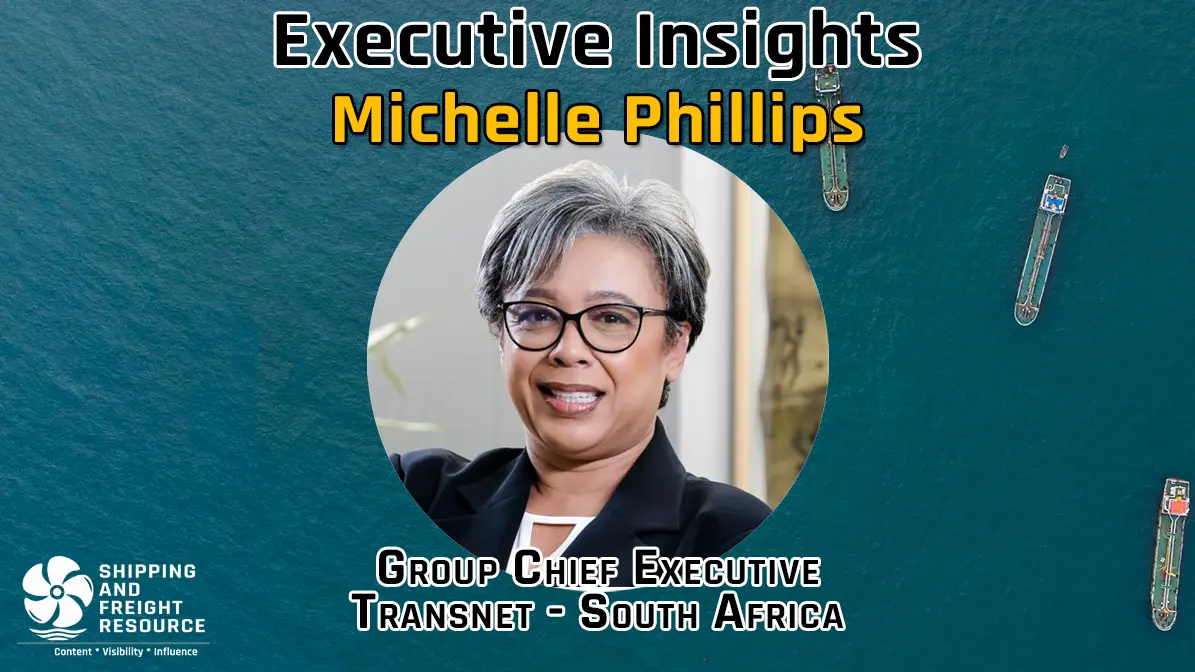
Speaking to Shipping and Freight Resource in this edition of Executive Insights, Phillips said Transnet’s improved performance in the 2025/26 financial year reflects the “cumulative impact of several years of focused and intentional recovery interventions across the port system as a whole.”
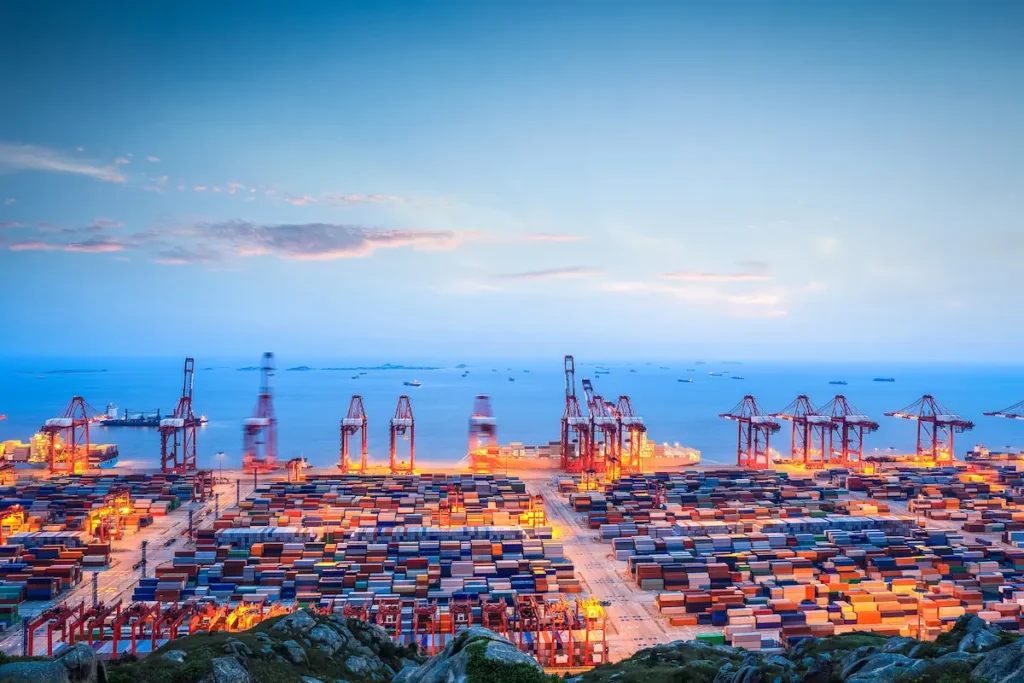
Transnet reportedly handled more than 304 million tons during the year, alongside a 9% increase in vessel traffic..
Performance
For Phillips, the performance, which has been described as its strongest performance in 15 years, came from a deliberate focus on equipment reliability, maintenance execution, operational planning, marine services, customer collaboration, and congestion reduction..
“One of the major issues that one had to deal with was the fact that the equipment reliability was a problem,” she said. “We had to give people the necessary tools to allow them to be able to do what is required of them.”
Marine operations were also central to the recovery, because shipping lines ultimately measure port performance by how long vessels stay in port and how reliably they can maintain their schedules..
Phillips said the reduction of congestion from the levels of late 2023 required “a lot of work and a lot of discipline across the port operations.”
The improved cargo performance has also been supported by stronger activity in key sectors, including automotive cargo, bulk commodities, agricultural commodities, and containerised trade.. Automotive volumes, she noted, have been breaking records..
Asked whether Transnet has turned the corner, Phillips said that while the numbers really speak for themselves and her message to the Transnet team has been to celebrate every victory, no matter how small, they should also be careful to avoid premature declarations of success..
For Phillips, the real test is not only what Transnet achieves today, but how today’s interventions support the future growth of South Africa’s economy..
Reform, not privatisation
On the question of the partnership between Transnet and ICTSI at Durban Container Terminal Pier 2, one of the most closely watched reforms in South Africa’s logistics sector, Phillips was clear that this should not be viewed as privatisation..
“We are very clear that we do not talk about privatisation,” she said.. “We talk about private sector participation.”
Under the model, Transnet retains ownership of the national asset, while combining that ownership with ICTSI’s global terminal operating expertise, experience, technology, innovation, and international best practice..
As per Phillips, Transnet had already been implementing improvements before the partnership with ICTSI became operational on 1 January 2026, and since then customers have started to feel the difference..
She said congestion has already reduced significantly, with vessels now largely arriving within their allocated slots and being berthed on arrival across the network..
For Phillips, the contrast with late 2023 is important because at the height of the congestion, some customers like Toyota had indicated that it took them around 21 days for a part to move from vessel to factory floor in 2023.. That number has since improved to 1 or 2 days..
“That, in my mind, is in fact what we want to hear from our customers,” Phillips said.. “We do not want to be responsible for stopping production in any factory. We do not want to be responsible for cargo not moving.”
The CPPI question
The discussion also touched upon the World Bank’s Container Port Performance Index, which has placed South African ports at/near the bottom of the global rankings, even while acknowledging improvement in some areas..
Phillips said she has been engaging with the World Bank on the index for around three years because her concern is whether the data behind the measurement can be verified, especially by the operators being assessed..
“Can you please share with us the information that you use to determine this index?” she said, describing the question she has put to the World Bank..
She said Transnet has sophisticated systems that track what happens to vessels in its container terminals by the minute and by the hour.. However, without access to the data used in the index, Transnet cannot properly cross-reference the report’s findings against its own operational records..
Phillips also questioned whether vessel presence alone tells the full story, as a vessel may be outside a port because it arrived early or it arrived late and is waiting for another slot, or is affected by rotation planning across a multi-port service.. Without that context, she said, performance conclusions can become misleading..
She also pointed out that the index itself acknowledges that it is not intended to be a comprehensive measure of port performance, yet its title creates the impression of broader coverage..
Emphasising her concern about the potential impact of these negative narratives on investment confidence, Phillips added that other global operators she has engaged with have told her they place limited emphasis on the report..
“This is a business who, for the most part, operates without support from the fiscus,” she said.. “We go to the markets like any private business. And that is why positive narratives are important.”
Phillips said while she is pleased that the World Bank has recognised South African ports as showing improvement, developing countries need measurement systems that are transparent, contextual, and supportive of long-term improvement..
On the question of the future
Phillips acknowledged that Transnet’s work is by no means complete and repeatedly returned to the need for sustainable improvement, disciplined execution, customer engagement, infrastructure investment, and continued reform..
In her own inimitable positive style, Phillips also believes South Africa must become better at recognising progress while dealing with its challenges, “We need to be a country of the glass is half full and not half empty,” she said..
“We need to keep pushing positive messages and positive narratives whilst we deal with the challenges, which are important,” added Phillips..
For Phillips, the recovery of Transnet is an economic story..
“We are here to grow the country,” she said. “We are here to grow the economy. We want to create jobs. And in order to do that, we need investment in this country and we need positive stories.”
That may be the central message from this Executive Insights discussion..
South Africa’s logistics system still has work to do.. Progress is being made, reform is moving, congestion has reduced, customer experience is improving, and Transnet’s leadership wants the country and the market to judge the recovery not only by old frustrations, but by current evidence and future direction..
The corner, in Phillips’ view, has been turned.. The next test is whether the improvement can be sustained..
Shipping and Freight Resource wishes Transnet and Michelle Phillips, all the very best..
You can view the full interview below..