
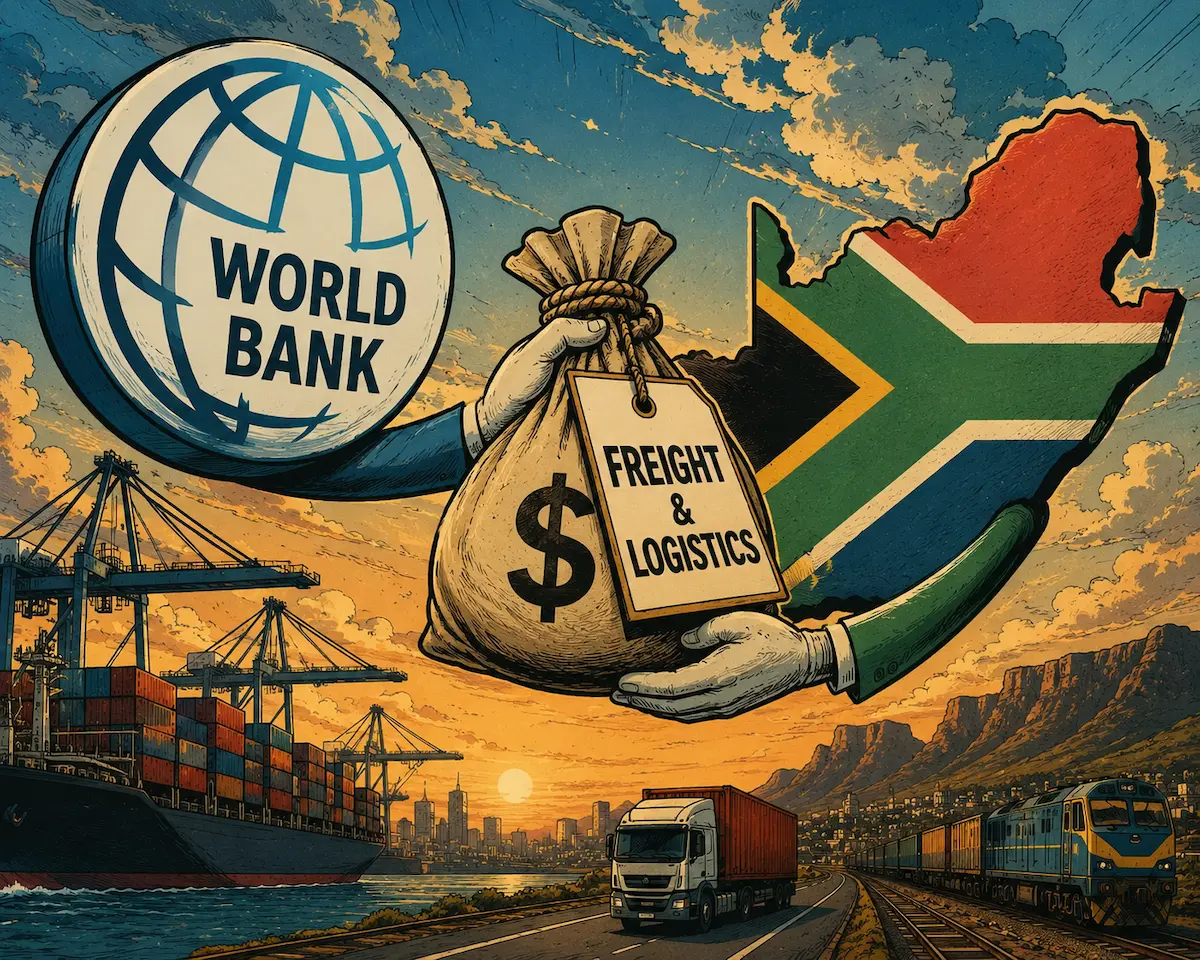
South Africa has secured a US$1.5 billion Development Policy Loan from the World Bank to support infrastructure modernisation and economic growth.. Freight transport reform is one of the three pillars identified in the programme, alongside energy and water and sanitation as a priority area for government intervention..
According to the National Treasury, the loan will support “necessary interventions and reforms aimed at advancing reforms in the electricity, freight and logistics sectors, and addressing pressing challenges in the water and sanitation sector“.. The Treasury added that these reforms form the foundation of faster and more inclusive economic growth..
What the World Bank is supporting
As per the World Bank’s factsheet, the objective of the freight transport sector reforms is to support the government’s efforts to transform the structure of the sector from a public monopoly to a competitive market..
In order to build the legal and institutional foundations required for transforming the sector, “the authorities have focused their attention on: (i) establishing an independent transport economic regulator to ensure fair and open access to private operators, and (ii) unbundling Transnet to allow for train operators to enter the market,” says the World Bank..
What industry wants to see
While World Bank funding supports the reform agenda, industry stakeholders are clear that operational improvements will ultimately measure success..
An executive in South Africa’s commodity export sector, who asked to remain anonymous, said priority should be given to restoring rail capacity and reliability through continued investment in rail infrastructure, signalling, locomotive availability, and network access..
“Every additional tonne moved by rail reduces logistics costs, eases pressure on the road network, and improves the international competitiveness of South African exports,” the exporter said..
The exporter added that port performance remains equally important, pointing to equipment reliability, maintenance, berth productivity, and cargo flow as areas requiring continued attention.. Higher rail volumes, improved port productivity, lower logistics costs, and stronger export competitiveness should be the measures used to assess the success of the reforms..
Terry Gale, Chairman of Exporters Western Cape, believes “the funding should support further equipment upgrades and practical improvements at South Africa’s ports“..
For Cape Town, he identified better landside congestion management when multiple vessels are worked simultaneously, a dedicated truck staging area, stronger rail links to and from the port, an automated truck booking system that can respond to wind closures, and new ship-to-shore cranes for the Cape Town Multi-Purpose Terminal..
He also called for properly equipped facilities for terminal staff, transporters, and other port users, together with the long-awaited acquisition of a port helicopter..
Positive support for Transnet’s recovery programme
The World Bank’s decision to identify freight and logistics as one of South Africa’s three infrastructure reform priorities is also positive for Transnet and the wider freight industry..
Many of the objectives supported through the programme are already reflected in Transnet’s recovery and modernisation plans, including improving operational performance, increasing export capacity, strengthening infrastructure, and enabling greater private sector participation where appropriate..
Over the past year, Transnet has reported improvements across parts of its rail and port operations while continuing to pursue infrastructure investment and operational reforms.. The World Bank’s support provides further international confidence in the direction of South Africa’s freight reform programme..
The funding itself will not solve South Africa’s logistics challenges.. The opportunity lies in translating policy reform into measurable operational improvements across rail and ports..
For exporters, importers, logistics service providers, and cargo owners, the numbers that matter remain the same: more cargo moving by rail, better performing ports, lower logistics costs, and a more competitive South African export sector..