
Today, 25 June 2026, marks the “Day of the Seafarer” as it does every year.. For 2026, the theme is “Carrying world trade. Carrying the risks.”
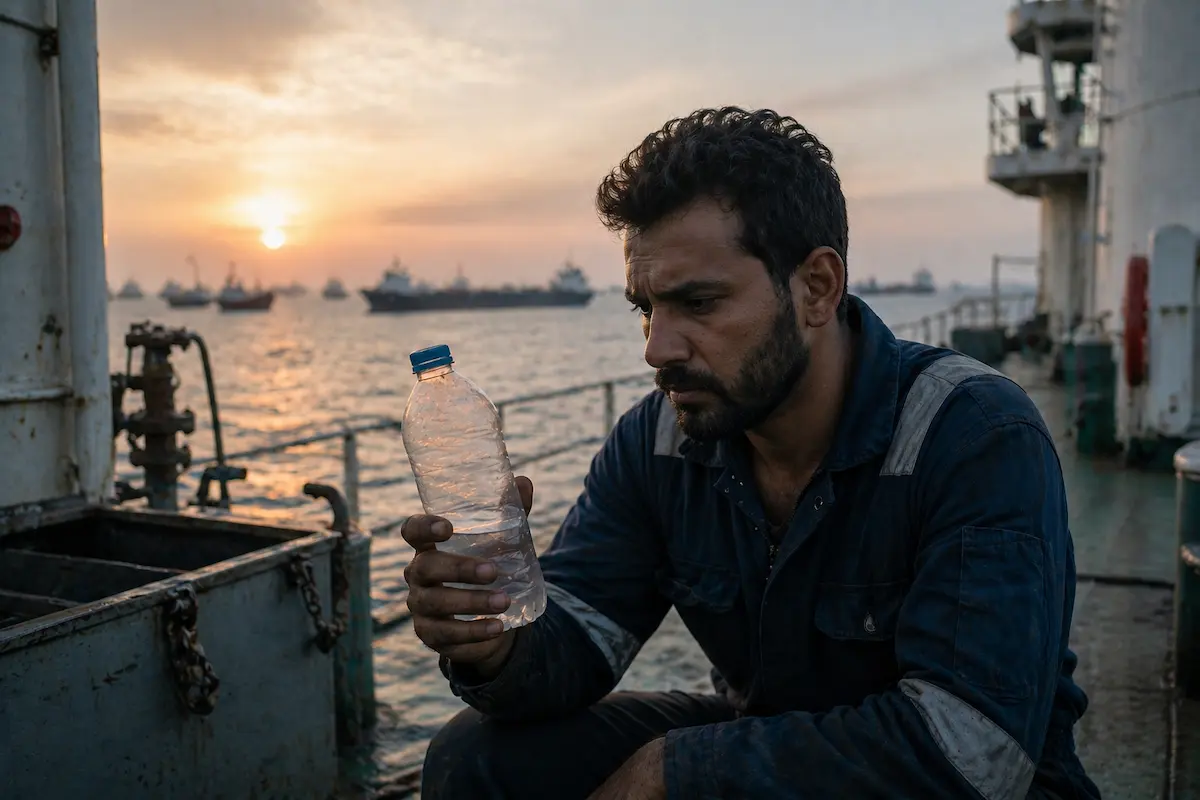
It is a painfully accurate line, especially given the fact that between 11,000 and 20,000 seafarers are stranded in the Strait of Hormuz while doing their jobs of “carrying world trade”
Seafarers caught in geopolitical risk
Yesterday, the IMO said it is working with Member States and the industry to evacuate around 11,000 seafarers following a memorandum of understanding between Iran and the United States, with IMO Secretary-General Arsenio Dominguez saying the operation will be carried out with Iran, Oman, other coastal States in the region, the United States, and the maritime industry.
IMO also said safety guarantees had been secured and conditions for safe navigation had been verified to support the operation.
While this is the formal part, the operational part is harder..
Evacuating seafarers from a high-risk region, especially bearing in mind all the instructions, protocols, routing options, navigational constraints, safety and risk protocols, traffic management, responsibilities, contingencies, and communication protocols that these ships have to follow, is not like changing a crew list on a quiet Tuesday afternoon..
It involves flag States, coastal States, shipowners, managers, agents, insurers, security advisers, ports, charterers, and sometimes governments that are not speaking to each other with great enthusiasm..
Somewhere in the middle of all that is a person on board a ship, who was just doing their job, waiting to know whether they can leave safely..
The risk has spread across trade routes
While the Strait of Hormuz is the latest issue affecting seafarers, it is part of a wider pattern.. Over the past few decades, different geopolitical conflicts have repeatedly placed seafarers in harm’s way, from the Persian Gulf to the Red Sea, the Black Sea, and the Sea of Azov..
For cargo interests, these risks may show up as delays, diversions, surcharges, vessel omissions, or tighter capacity..
For the millions of men and women who are on board, it shows up as watchkeeping under threat, uncertainty over repatriation, mental strain, and the knowledge that the ship they are working on can become part of someone else’s conflict..
That is a heavy burden to carry for people whose job is already demanding on a normal day..
So a BIG SALUTE AND R E S P E C T to these brave souls who weather all these conditions to keep world trade moving..
Acknowledging the seafarer
In a video message about the Day of the Seafarer 2026, IMO Secretary-General Arsenio Dominguez underscored his appreciation for the 1.8 million men and women who work at sea, saying their work is essential to the global economy and daily life around the world..
“To all seafarers: thank you. Your work is essential to the functioning of the global economy and the daily lives of people around the world. While it may not always seem visible, your safety, security and welfare remain our highest priority.”
In his own message, United Nations Secretary-General Antonio Guterres said:
“When nations clash, seafarers are often caught in the crossfire. Recent events in the Strait of Hormuz have seen tens of thousands of seafarers stranded as they work far from home to keep the world fuelled and fed… Mariners must never be the victims or pawns of geopolitical conflict.”
Day of the Seafarer needs to be more than just a hashtag – #DayoftheSeafarer
The IMO campaign invites seafarers to share what “Carrying world trade. Carrying the risks” means to them.. It also asks governments, maritime administrations, NGOs, unions, shipping companies, and industry bodies to show how they support seafarer safety, welfare, and mental health, especially in high-risk areas..
That last part is where the industry needs to do more because welfare is tested in decisions, not statements.. Questions like
- Do crews have access to clear information when routes change..??
- Are crew changes being planned early enough when trading to risky areas..??
- Are seafarers given proper support after transiting conflict zones..??
- Are chartering, operations, crewing, insurance, and commercial teams speaking to each other before the vessel is already committed..??
are all key questions that must be asked and answered..
While seafarers have always worked with inherent risks like weather, machinery, cargo, isolation, port pressure, fatigue, piracy, and accidents, they didn’t sign up for “geopolitical conflicts” based on the whims and fancies of so-called world leaders..
If 11,000 passengers are stranded on a few cruise ships, the same world leaders would have been up in arms much more vociferously and with a sense of urgency.. But when the “people” stuck are seafarers, the tune seems to be different and the pace slow, even from the governments to which these seafarers belong..
Day of the Seafarer 2026 lands at a time when the message is unusually direct.. World trade depends on seafarers but the same seafarers are carrying more of the world’s geopolitical risk than many people ashore will ever see..