
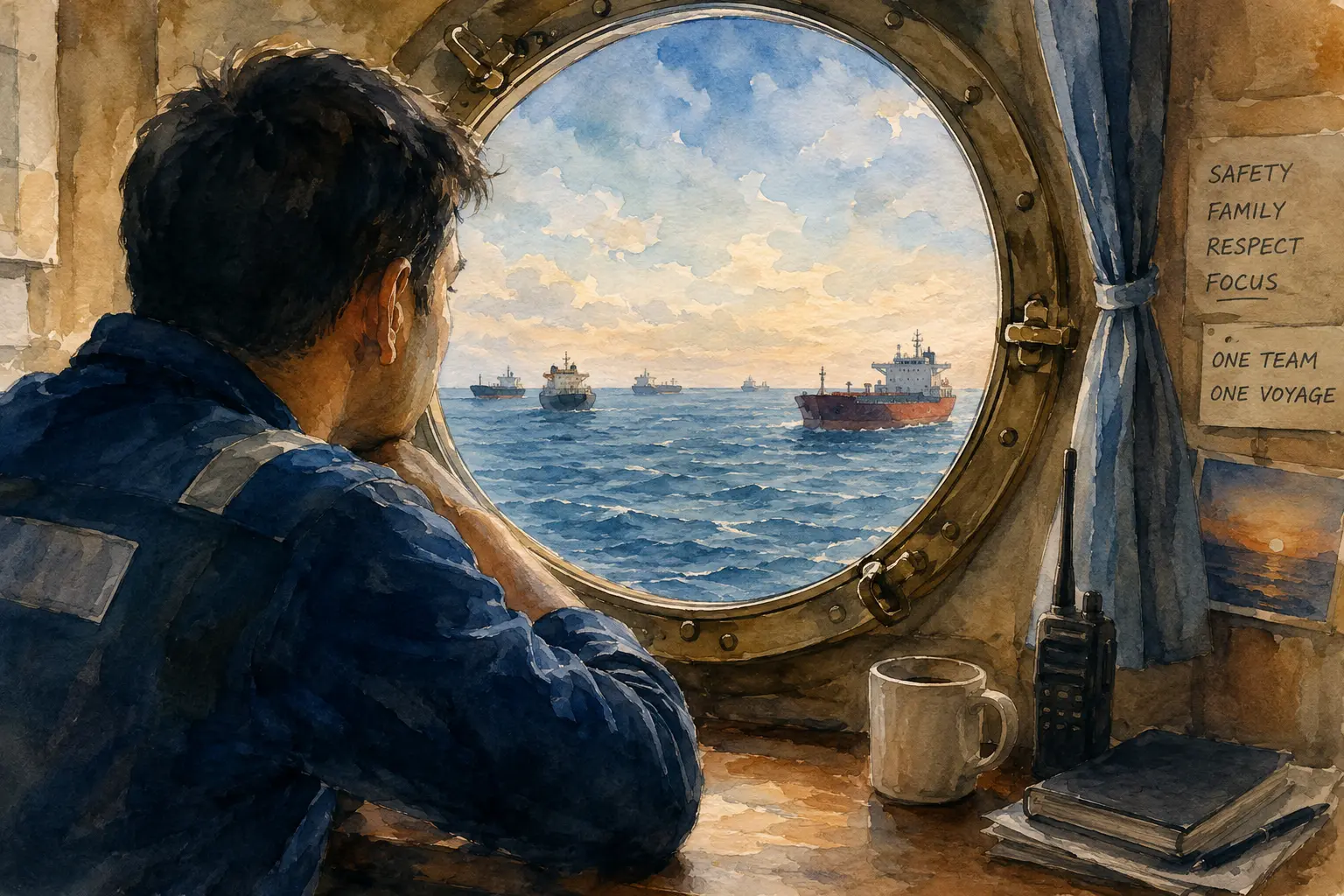
In March, Reuters reported that around 20,000 seafarers were stranded in the Gulf region as governments discussed the creation of a safe maritime corridor to facilitate vessel movements and improve crew safety.. ITF’s news also supports this number..
Fast forward to 23rd June 2026, the International Maritime Organization (IMO) has announced plans to evacuate more than 11,000 seafarers still stranded in the region..
Neither the IMO statement nor the accompanying notices explain the difference between the two figures, but whatever the reason, thousands of seafarers remain caught in one of the world’s most strategically important shipping corridors for months..
While the IMO describes this as an evacuation plan, the operation appears to involve the controlled departure of vessels carrying those crews rather than the physical evacuation of seafarers from their ships..
If completed successfully, the operation could rank among the largest geographically concentrated seafarer movements seen in modern shipping..
How unusual is an operation of this size..??
The maritime industry has experienced several major disruptions in recent decades, but few have involved the movement of such a large number of seafarers from a single geographic region..
The COVID-19 crew-change crisis remains the largest seafarer welfare emergency in modern shipping history..
Industry bodies, including the IMO, ICS, and ITF, estimated that around 400,000 seafarers were unable to leave ships because of travel restrictions.. At the same time, a similar number were unable to join vessels as replacement crew..
While COVID-19 was a global situation, the situation in Hormuz is different.. The current operation focuses on a specific region and a concentrated group of seafarers affected by a single conflict..
Historical comparisons aside, the IMO’s figure of 11,000 seafarers places the Hormuz operation among the largest concentrated seafarer movements associated with a maritime conflict in recent decades..
Ships are moving, but normal navigation has not returned – Fact
The IMO has stated that the operation will be conducted in cooperation with Iran, Oman, other coastal States, the United States, and the maritime industry..
The announcement also comes against a backdrop of continued uncertainty around navigation through the Strait of Hormuz..
Oman’s NAVAREA IX notice confirms that the normal Traffic Separation Scheme is currently considered unsafe for use and that vessels are being directed through temporary routing arrangements..
Vessel tracking data and multiple reports show commercial vessels transiting the area under controlled conditions..
The result is a situation where ships are moving, but normal navigation has not resumed.. Temporary routes, vessel-specific instructions, and heightened security measures remain in place..
A different measure of the crisis
When conflict disrupted shipping through the Strait of Hormuz earlier this year, much of the industry’s attention focused on oil prices, freight rates, insurance premiums, naval deployments, and the potential impact on global supply chains.. Less attention was paid to the people on board the ships..
The IMO announcement shifts attention to a different measure of the crisis..
- Not how many ships were delayed
- Not how many cargoes were disrupted
- But how many seafarers remained in the region waiting for a safe route out
Whether the final number is 11,000 or more, the scale of the operation is significant.. It also serves as a reminder that behind every discussion about trade flows, freight rates, or maritime security are the crews who continue to operate the ships that keep global trade moving..