
Car carriers use powerful mechanical ventilation systems to move fresh air through their enclosed vehicle decks and remove exhaust gases generated during loading and discharge.. The mushroom-shaped ventilators seen on the upper decks of some PCTCs form part of this system, while SOLAS Regulation II-2/20 also connects ventilation with fire safety..
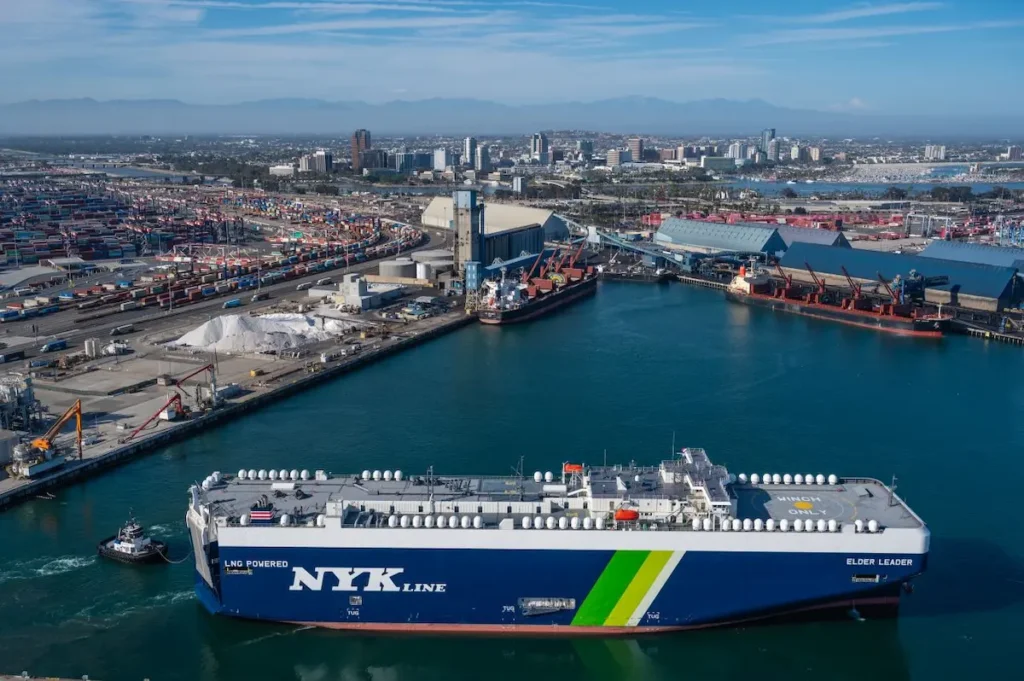
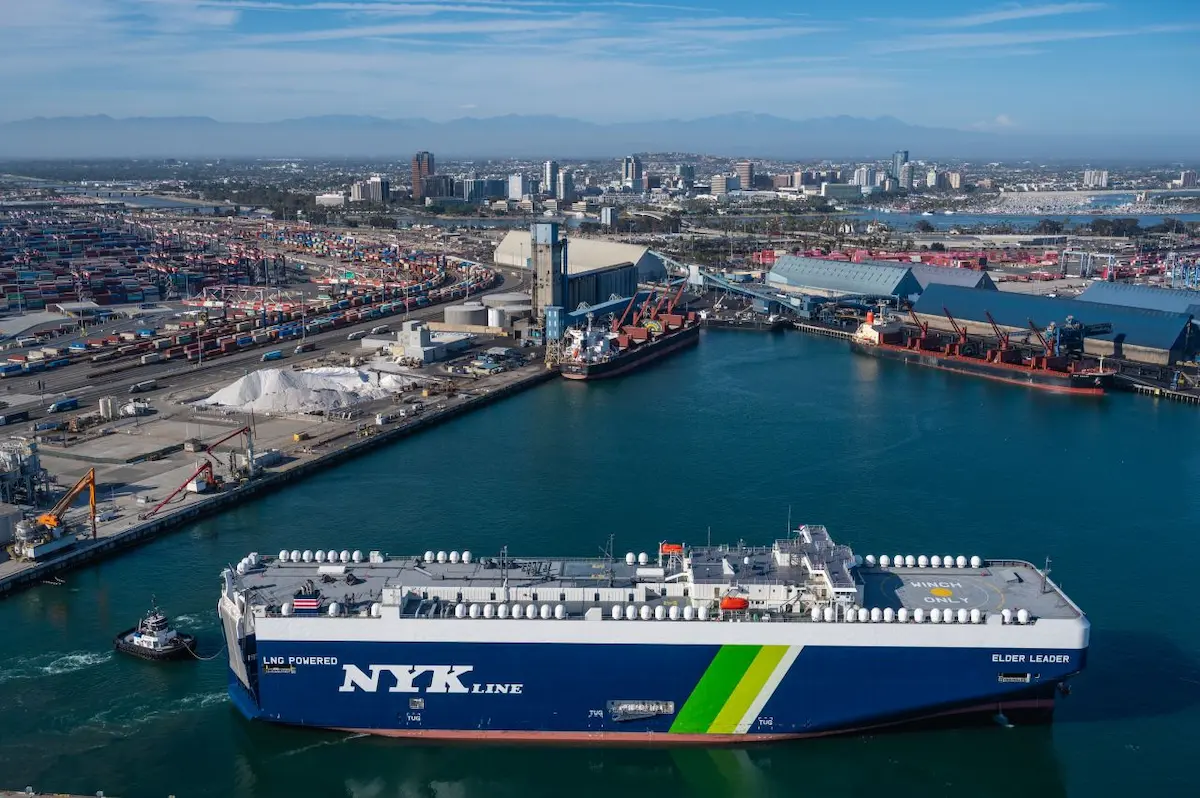
If you live in a coastal region and especially around big cities, you have probably seen these huge, almost box-shaped ships like the one shown above (Image: Nick Souza Photography), gliding past..
These are car carrier ships (also known as RoRo ships or Roll On-Roll Off ships – because the cargo is driven in and out of the ships using ramps), designed to transport thousands of cars, trucks, buses, construction equipment, and other types of wheeled and rolling cargo across the oceans..
Many modern car carriers like the one featured above are classified as Pure Car and Truck Carriers (PCTCs), with the flexibility to accommodate different types and sizes of vehicles and rolling cargo..
This article is not about these ships and how they operate, it is about the rows of white, dome-shaped structures that look a little like oversized mushrooms on the upper deck of some of these ships..
If you are wondering what they are and why a car carrier needs so many of them, these structures are known as mushroom ventilators, and they have a clear and interesting purpose.. Here goes..
Think of a car carrier as a giant floating parking garage

A PCTC can have many enclosed vehicle decks (think floors in a multi-storeyed parking lot) stacked one above another inside that enormous box-shaped structure..
Vehicles are loaded and discharged using the ship’s ramps.. Drivers physically drive the cars, trucks, and other rolling cargo like Mafi trailers into the ship, move through the internal ramp system, and park them in their allocated positions on board the ship..
Now think about what happens during a busy loading operation.. Hundreds, sometimes thousands, of vehicles are being driven through enclosed spaces.. This particular ship featured in the image can carry up to 7,000 standard cars.. Car engines are running, emitting exhaust gases.. Heat builds up while people are working inside these spaces..
During loading and discharge, when vehicle engines are being started, and vehicles are constantly moving through the decks, ventilation becomes particularly important..
Anyone who has spent time in a poorly ventilated underground parking garage will understand the problem immediately.. A PCTC takes that problem to a completely different scale, considering the concentrated movement of cars in and out to ensure the loading and discharging operations are completed on time..
The vehicle decks need to breathe
Vehicle exhaust contains gases including carbon monoxide and nitrogen oxides.. Allow those gases to accumulate inside an enclosed cargo deck and conditions can quickly become dangerous for the drivers, stevedores, and crew working there..
Car carriers therefore have powerful mechanical ventilation systems designed to continuously exchange the air within their vehicle spaces..
Large electric fans move fresh outside air through ventilation trunks into the cargo decks and extract contaminated air from them.. Depending on the ship’s ventilation arrangement, different openings form part of the supply and exhaust system..
Those mushroom-shaped structures visible on the upper deck are part of that ventilation arrangement.. You could quite literally think of them as part of the ship’s breathing system.
These structures also address another problem
Putting large ventilation openings on the exposed upper deck of an oceangoing ship creates an obvious problem.. Ships operate in rain, spray, and heavy seas.. Any opening from the deck going into a ship has to be designed with that environment in mind.
The raised hood of these systems allows air to pass through the opening beneath it while helping prevent rain and sea spray from travelling directly down the ventilation trunk..
It is a remarkably simple-looking solution to a very practical marine engineering problem: move large quantities of air through the ship while restricting the entry of water..
And on a ship carrying thousands of new and expensive vehicles, restricting water ingress into the ventilation system and the spaces below is rather important..
Ventilation also matters when there is a fire
Another side of the ventilation system becomes particularly important aboard vehicle carriers: fire..
A vehicle deck contains a large concentration of vehicles, together with fuels, batteries, plastics, tyres, electrical systems, and other combustible materials.. Fire detection, containment, and firefighting arrangements are therefore a major part of the ship’s safety systems..
Ventilation must be considered as part of that response. Air movement can supply oxygen to a fire and can also influence the movement of smoke through the space..
This is why SOLAS Regulation II-2/20 requires arrangements that allow the ventilation system serving vehicle and ro-ro spaces to be rapidly shut down and effectively closed from outside the space in the event of a fire..
Closing arrangements and dampers associated with the ventilation system allow the relevant ventilation openings and ducts to be closed when required..
This can also be important to the operation of certain fixed firefighting systems. Where a fixed gas fire-extinguishing system is used, for example, the protected space needs to be capable of being effectively sealed so that the extinguishing agent can achieve and maintain the concentration needed to suppress the fire..
A small feature connected to a much bigger system
When we look at ships from the quay, we naturally notice the obvious things like the size of the ship, the ramps, the enormous box-like superstructure, and of course the thousands of vehicles waiting in the terminal alongside..
Those little mushroom-shaped structures sitting on the upper deck are easy to overlook, and that is one of the things I continue to find fascinating about ships..
Something that looks almost insignificant from the outside can be connected to a very important operational and safety function several decks below..
Some ships use the mushroom ventilators shown here, but you won’t necessarily see the same arrangement on every PCTC.. Mushroom ventilators themselves come in different configurations, and ships can also use other types of ventilation openings and arrangements, including gooseneck ventilators and louvered openings, connected to the ventilation trunks serving the spaces below..

The exact arrangement depends on the ship’s design and the ventilation system serving its various spaces..
So the next time you see a PCTC alongside and spot those rows of “mushrooms” or other structures on top, you will know what at least some of them are doing up there..
They are helping that giant floating parking garage breathe.. 🙂
My Take
One thing I have learnt from working around ships for many years is that understanding how a ship works starts with asking what the things you can SEE are actually doing.. How do the cranes and derricks work, and why are some of them designed differently on different ships.. How important adjustable decks are on car carriers etc.. These ventilators are a good example of how what is seen outside contributes to what’s happening inside a ship that otherwise looks like a giant sealed box.. For me, that curiosity is an important part of understanding shipping..
Article FAQ
They are mushroom ventilators forming part of the ship’s ventilation arrangements.. The characteristic raised hood allows air to move through the opening while restricting the direct entry of rain and sea spray.. They can form part of the air supply or exhaust arrangements serving spaces within the ship..
Car carriers contain large enclosed vehicle spaces where cars, trucks, and other rolling cargo are driven during loading and discharge.. Running engines produce exhaust gases including carbon monoxide and nitrogen oxides.. Mechanical ventilation supplies fresh air and removes contaminated air from these enclosed spaces..
Mechanical fans move outside air through ventilation ducts and trunks serving the enclosed vehicle spaces and remove contaminated air through the exhaust arrangement.. The visible deck openings are therefore only one part of a much larger ventilation system extending through different areas of the ship..
No.. Ventilation arrangements differ between ships.. Mushroom ventilators themselves have different configurations, while ships may also use gooseneck ventilators, louvered openings, and other arrangements connected to the ventilation system.. The visible arrangement depends on the vessel’s design and the spaces being served..
*** END OF ARTICLE ***