

Supply chain teams are under pressure they haven’t felt in a generation. Tariffs, port congestion, and the whiplash of pandemic-era disruption have forced a hard look at where fulfillment networks are actually built – and whether those networks can absorb the next shock without failing customers.
The response has been a structural shift. According to the Extensiv 2025 State of the Third-Party Logistics Industry Report, 76% of shippers and 71% of 3PL providers are actively moving toward more regional or domestic production networks. That’s not a minor adjustment. That’s a fundamental rethinking of how goods move to customers.
For businesses serving the Western United States, one location keeps coming up in those conversations: Salt Lake City, Utah. Not because it’s trendy, but because the fundamentals are genuinely strong. Geography, infrastructure investment, and a technology-forward logistics culture make it worth a serious evaluation – not just a passing mention.
Why Salt Lake City Has Become a Western Logistics Hub
The case for Salt Lake City starts with a map. I-15 and I-80 intersect directly in the city, creating a natural crossroads that puts roughly 80 million people within an 18-hour drive. According to fulfillment data from operators in the region, a facility positioned here can reach 96% of the Western U.S. population within two days by ground – without relying on air freight.
Contrast that with coastal alternatives. Los Angeles and Long Beach are the largest port complexes in North America, but the land costs, labor costs, and chronic congestion there eat into the economics of operating a fulfillment center. Seattle and the Bay Area face similar issues. Salt Lake City offers lower operating costs and the same or better delivery reach across the Mountain West, Pacific Northwest, and Southwest.
For brands importing goods from Asia, there’s another advantage to note: Salt Lake City is within Foreign Trade Zone #30. Importers operating inside an FTZ can defer or eliminate customs duties until goods actually enter U.S. commerce – a genuine cost lever for high-volume importers, not just a technicality.
For businesses weighing those advantages, a 3PL Salt Lake City operation translates them into practical outcomes: lower average shipping zones, faster last-mile delivery across the Mountain West, and operational flexibility that coastal hubs struggle to match at comparable cost.
The Infrastructure Behind Utah’s Logistics Advantage

Geography helps. Infrastructure is what makes geography sustainable at scale.
Utah’s logistics story has changed significantly over the past five years, largely because of the Utah Inland Port Authority (UIPA). The UIPA oversees a 16,000-acre logistics zone in Salt Lake City’s Northwest Quadrant that integrates Union Pacific and BNSF rail connections, the state highway network, and cargo operations at Salt Lake City International Airport into a single coordinated system.
The financial commitment is real. In June 2025, the UIPA approved a $22 million public infrastructure district to fund roads, water, and sewer improvements in the Northwest Quadrant – direct support for the facilities and operators working there. According to UIPA data, logistics-reliant industries contribute $78.2 billion annually to Utah’s GDP, and 37% of the state’s entire GDP depends on efficient logistics systems, supporting 547,000 jobs statewide.
That level of economic dependence on logistics isn’t a liability – it’s a policy driver. Utah has a strong incentive to keep investing in logistics infrastructure, which means the improvements already made are likely to continue.
There’s also a rail cost advantage that doesn’t get discussed enough. The UIPA’s system includes rail transfer capability from the Ports of Oakland and Los Angeles/Long Beach. Moving containers by rail from the West Coast to Salt Lake City typically runs 30-50% cheaper than long-haul trucking – a material cost difference for importers managing high-volume SKUs.
As covered in the analysis of how logistics drives trade and economic growth, infrastructure investment at the regional level tends to compound: the more efficient the corridor, the more volume it attracts, and the better the service options become for everyone operating within it.
What to Look for When Choosing a 3PL in Utah

The quality of 3PL providers in any market varies widely. Utah is no exception. The geographic and infrastructure advantages are real, but they only matter if the operator you choose can actually execute. Here are five things worth scrutinizing before you sign anything.
- Verified delivery reach, not headline claims. Ask for average shipping zone data for your specific SKU mix and customer base, not a best-case scenario. Zone averages drive your actual freight costs.
- Technology stack. According to Warehousewiz’s 2026 3PL industry statistics, 87% of 3PL providers now use Warehouse Management Systems as their most widely implemented technology. WMS is table stakes. The more important question is whether the provider’s systems integrate cleanly with your e-commerce platform, ERP, or inventory management tools – and whether they offer real-time visibility without manual reporting requests.
- Documented performance metrics. Order accuracy rates and on-time shipping percentages should be available as actual data, not marketing copy. If a provider won’t share historical metrics, that tells you something.
- Scalability under pressure. Can the provider handle a 3x spike during Q4 or a flash sale without degrading SLAs? Ask specifically about peak season staffing, capacity allocation, and what happens when volume spikes. If your products ship as bundles or kits, also ask whether the provider offers product kitting services. Kitting capacity is often the first constraint to break during peak season, and not every 3PL treats it as a core offering.
- Transparent pricing. Watch for surcharges that don’t appear in base quotes: oversize item fees, returns processing, peak period surcharges, and account minimums. The U.S. Chamber of Commerce’s guide to choosing a 3PL partner flags hidden fees as one of the most common pain points businesses report after signing long-term 3PL contracts.
Maersk’s framework for choosing a 3PL provider also emphasizes the value of verifying a provider’s financial stability – a 3PL that runs into operational trouble mid-contract can strand inventory and disrupt customer relationships at the worst possible time.
For a deeper look at how outsourced fulfillment models work structurally, scaling warehouse operations with the outsourcing framework is worth reading before you start comparing providers.
The Technology Factor: Why Utah’s 3PL Ecosystem Runs Differently
Utah’s tech corridor – commonly called Silicon Slopes, stretching along the Wasatch Front from Salt Lake City to Provo – has produced a density of software companies, SaaS businesses, and tech-adjacent employers that’s unusual for an inland Western state. That tech culture has filtered into the 3PL ecosystem in visible ways.
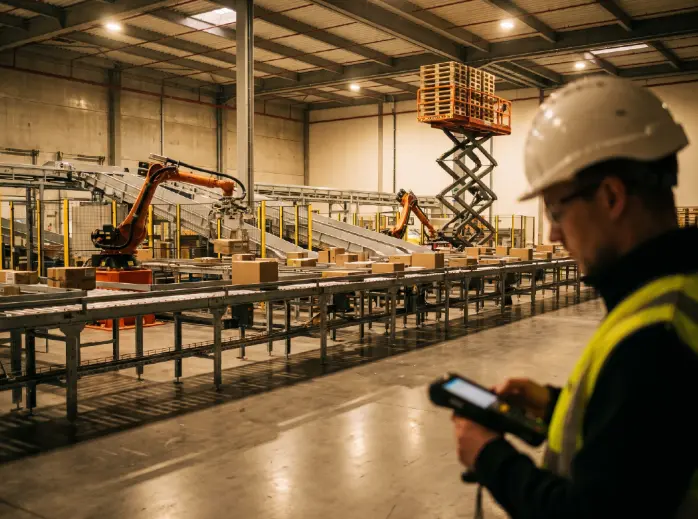
The national WMS adoption figure of 87% is high by any standard. But Utah 3PL operators tend to skew toward more aggressive automation investment: robotic picking systems, automated sortation, and API-first integrations that don’t require a 90-day implementation project to connect with a new client’s systems.
That matters because the direction of the industry as a whole is clear. DHL announced a EUR 2 billion robot deployment program as part of its global automation push. Amazon has deployed over 750,000 robots across its fulfillment network. The 3PLs that are building automation capacity now will be better positioned to handle volume and maintain accuracy as labor costs continue to rise.
For businesses thinking about long-term 3PL partnerships, the question isn’t just who can handle your current volume – it’s who can scale with you without requiring a partner switch in three years. As discussed in the context of how freight technology is evolving, the gap between tech-forward operators and those still running manual processes will only widen.
According to Warehousewiz (2026), 83% of 3PL users reported satisfaction with their services, and 71% said using a 3PL improved their customer service. Those numbers hold up when the 3PL’s technology is matched to the client’s operational needs – and fall apart when it isn’t.
Making the Case for a Strategic Logistics Partner
The argument for Salt Lake City as a Western fulfillment hub isn’t complicated. The geography is real. The infrastructure investment is real. The tech-forward operator culture is real. And the shift toward regional fulfillment networks – driven by tariff pressure, supply chain fragility, and the economics of two-day ground delivery – makes the timing genuinely favorable.
What’s worth being clear-eyed about: not every business needs a Utah 3PL. If your customer base is concentrated on the East Coast or in the Midwest, a Salt Lake City facility may add zones rather than reduce them. The math has to work for your specific geographic distribution.
But for businesses with meaningful Western U.S. volume, the combination of zone savings, infrastructure stability, and technology-capable operators makes Salt Lake City a serious contender – not an afterthought. The global 3PL market is projected to reach $1.46 trillion in 2026, according to The Business Research Company, and the U.S. market alone is expected to grow at 8.4% CAGR through 2030, per Technavio (2026). That’s a competitive field. Choosing the right regional partner, in the right location, is one of the cleaner decisions available in supply chain planning right now.