
Multi-load food shipments are a common practice, but without the right precautions, it creates the perfect conditions for cross-contamination. Just one of these incidents can cost carriers and operators between $4,700-$6,700, which includes everything from stock checks to equipment cleaning.
That’s before you factor in the cost of recalls and lost contracts. The good news is that cross-contamination in shared freight is preventable. Keep different products separate, control temperatures, follow a solid cleaning routine, and you’ll avoid the biggest risks and protect both your shipment and your business.
1) Store foods separately
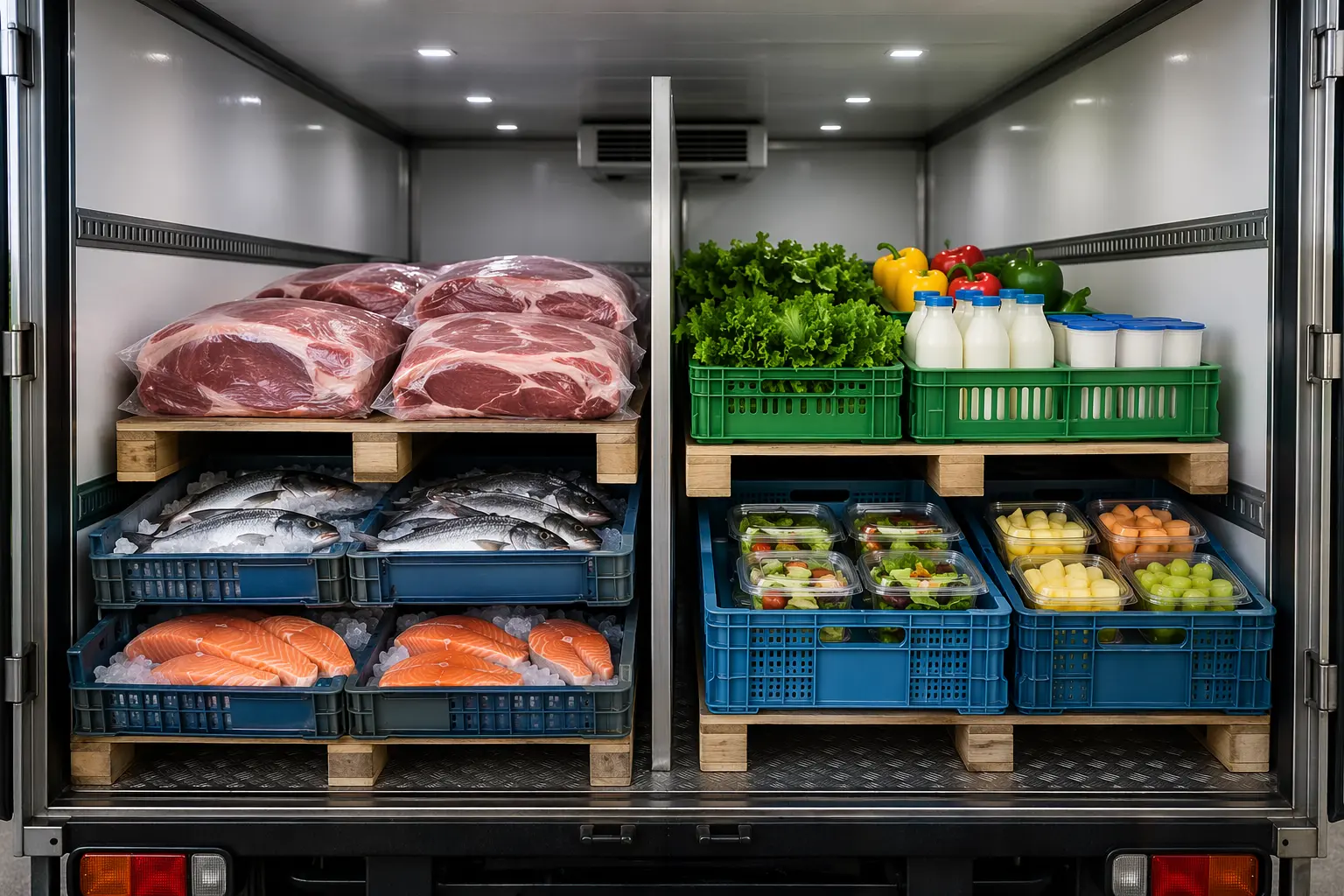
Raw foods like meat and seafood must be stored well away from ready-to-eat products during transport. This is due to rules from the FSMA and USDA, and is an important precaution as 1 in 6 people in the U.S. get sick from foodborne diseases every year, according to the CDC.
Many of these cases can trace back to the supply chain. Compartments or pallets are the easiest way to separate products to prevent bacteria from spreading between them. Also, if any products are prone to dripping, store them on the bottom shelves so they can’t contaminate the rest of the load. Drip trays can catch any leaks.
2) Set the right temperature
Temperature control is one of the easiest things to get wrong in shared freight, but it’s so important for meat, seafood, dairy, and frozen foods, of course.
Bacteria grow fastest when temperatures range between 40 °F and 140 °F, and can double in number in just 20 minutes. Not only does the food spoil if that happens, but the bacteria can then contaminate other products in the load that otherwise would be perfectly fine, so it’s an all-around huge waste.
To put this into perspective, 15% of food losses occur during transport and storage in the cold food chain alone, which adds up to a $210 billion loss worldwide. So always follow the right temperature protocols to protect your load and your revenue, as warehouse specialists WSI explain.
Under FSMA rules, the shipper has to document the correct temperature range for every load. This has to be put in writing and communicated to everyone along the supply chain. From that point on, the carrier has to maintain that range throughout the journey.
Even before vehicles are loaded, they should be pre-cooled to match the temperature needed by the cargo. You need to do this to prevent condensation that can form if there’s too much of a temperature difference between the warm vehicle and the cold food. So think of pre-cooling as another necessary measure to prevent cross-contamination.
3) Clean between loads
Don’t overlook the importance of deep cleaning and sanitizing trailers, pallets, containers, and loading gear in between every shipment. Biofilm (a thin layer of bacteria) can develop on damp surfaces in just 24-48 hours if they’re not cleaned properly, and it can then transfer to other products.
This is especially an issue when you’re switching between load types. If you just shipped raw meat and switch to ready-to-eat foods, any bacteria left behind will contaminate products that won’t be cooked before they’re eaten – which means they’re not safe to eat.
The same goes for allergens, as any traces left will contaminate foods that are technically supposed to be free from. Keep a sanitation checklist for every load and have managers review cleaning logs regularly. This is the easiest way to stay on top of cleaning, and you also have to keep logs to show the FDA, so they’re not optional anyway.
Conclusion
Cross-contamination is always going to be a risk in shared freight but it’s preventable. Separate your products, control the temperature, and clean properly, and you’ll avoid the biggest risks and keep your business trucking along smoothly.