
Having grown up with three sisters, being the father of two daughters, and having worked with some phenomenal women throughout my 37 years in global transport and trade, women have always held a special place in my heart..
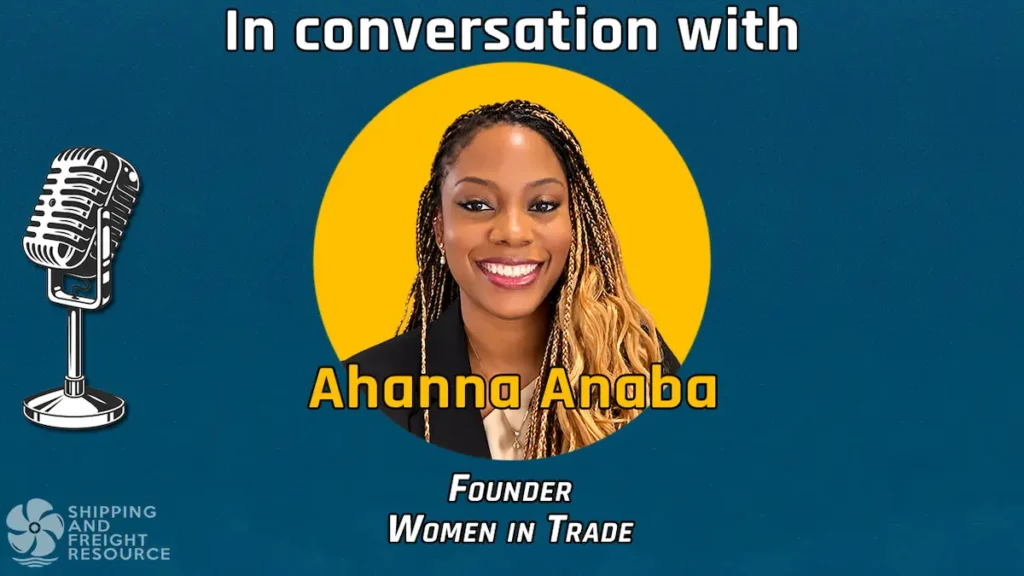
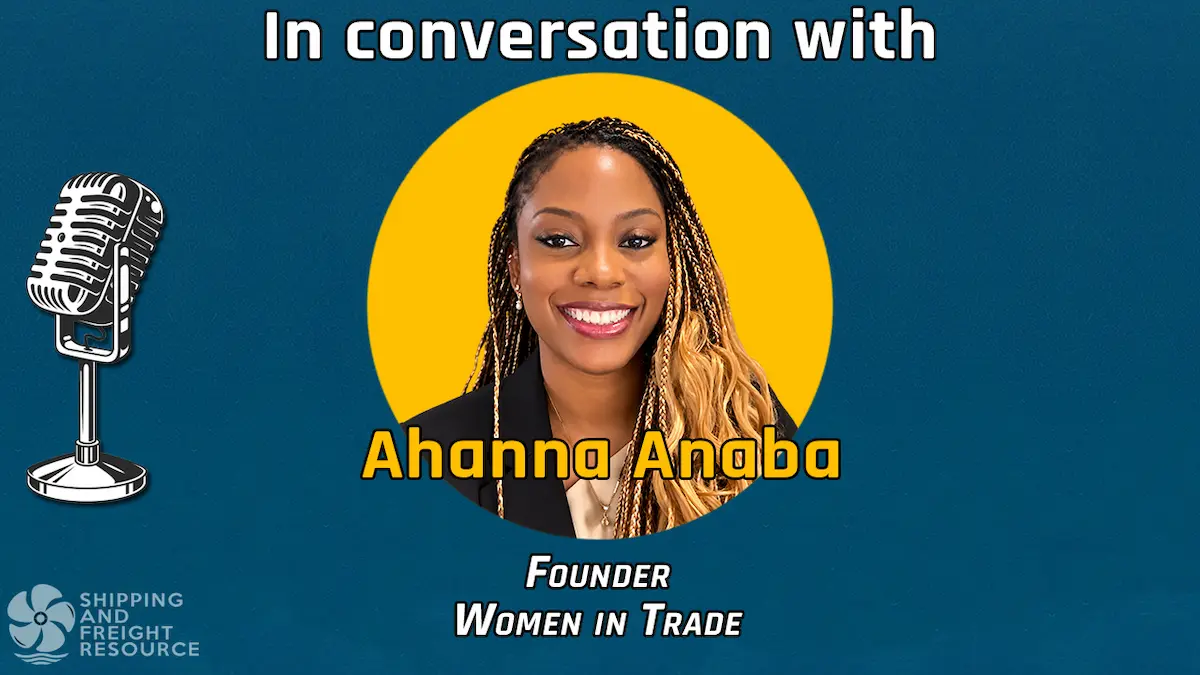
So when I heard about Women in Trade, I knew I needed to have a conversation with its founder, Ahanna Anaba..
What started as a conversation about the genesis of Women in Trade quickly became a much wider discussion..
About how the different parts of global trade can actually talk to each other and, perhaps more importantly, who gets to be in the room when those conversations take place.
Watch my full conversation with Ahanna below, or continue reading for some of the points that stood out for me..
The women doing the work aren’t always the ones we see
I started by asking Ahanna what prompted her to establish Women in Trade..
Her answer came from something she had noticed while attending industry conferences and working with banks and their operational teams..
The conferences often featured familiar faces, with men occupying many of the visible positions.. Yet when she spent time with the people working behind the scenes, she found many knowledgeable and experienced women who rarely appeared on those platforms..
“There were actually quite a lot of women in those teams who were very knowledgeable.. They just weren’t necessarily as visible,” she explained..
Women in Trade grew from that observation..
The idea was to create opportunities for these women to meet, exchange knowledge, build professional relationships, and become more visible within the wider industry..
I found that distinction between experience and visibility particularly relevant..
In global trade, some of the most knowledgeable people I’ve worked with are women who deal with transactions, documentation, customers, regulations, systems, and operational problems every day..
Their knowledge often remains within their organisations, while industry discussions tend to feature people who already have established public profiles..
Global trade has plenty of expertise, but it operates in silos
Ahanna’s main observation is that trade has very common problems, and most of them can be solved with better collaboration and alignment..
“I find that our industry is quite fragmented”.. Her concern is that people often approach these problems from their own professional or geographical positions..
Banks discuss banking issues.. Logistics providers discuss logistics.. Insurance professionals discuss insurance.. Each group has its own conferences, terminology, priorities, and understanding of what needs fixing..
But trade transactions involve all these groups..
As Ahanna observed, “Everyone is willing, everyone has ideas and solutions from their perspective, but actually bringing these together has been really where that challenge is..”
She also made a point that trade finance is NOT yet an investable asset, not because it’s not meant to be, but because it isn’t transparent enough, which brings it back to collaboration..
For Africa, there is another layer.. Many decisions about African trade are made outside the continent, and the structures that come out of those decisions don’t always fit how trade actually works on the ground..
Ahanna referred to a popular saying that captures the problem rather well.. “If you’re not at the dining table when decisions are being made, you’re probably going to be had for dinner..”
Without African practitioners participating in those decisions, the resulting policies and structures can be difficult to apply to actual trade transactions on the continent..
What the roundtables in Nigeria and South Africa revealed
Women in Trade runs practitioner-led roundtables, bringing together the women who live and breathe trade every day..
In Nigeria, the common belief is that banks prefer financing large corporates over SMEs.. Yet some of these large corporates were experiencing working capital and operational pressure because their SME suppliers were struggling.. When risk isn’t properly managed at the SME level, it can spread through the entire value chain..
Ahanna mentioned that several Nigerian banks are now establishing ecosystem banking teams, bringing corporate banking and SME banking closer together to support businesses operating within the same value chain..
In South Africa, the conversation was about its changing role as the traditional gateway to Africa.. The biggest insight was simple.. Clients don’t care whether you finance them from New York or London.. They want one price, one way of working and banking partners who can support them across all their markets, and that needs far more collaboration between international, regional and local banks..
Another point Ahanna raised was the importance of knowledge and professional networks.. Knowing your subject and keeping up with industry developments is essential, but so is knowing the right people to get things done.. As she pointed out, trade is particularly relationship-based in Africa, and I think that applies equally to global trade as a whole..
Trade Archive, the first Women in Trade magazine
When asked about the idea behind Trade Archive, Ahanna mentioned that following the roundtable discussions, there were several queries, particularly from women, who reached out wanting to know what was discussed or what kind of information was shared..
So it was decided to pull it all together in one place each year as Trade Archive, the inaugural Women in Trade magazine (now also in print)..
One of Ahanna’s original motivations for establishing Women in Trade was to create a platform that gives greater visibility to the talent and practitioners working on the ground, particularly those who can share first-hand knowledge of what is happening in trade..
Trade Archive takes that objective further, bringing together interviews with CEOs, product heads, and practitioners discussing what they’re seeing, experiencing, and planning across the industry..
“Pulling it together was probably the hardest thing I’ve done this year, but definitely the most rewarding thing,” said Ahanna.. “We’re hoping to have quite a few of these printed for our next event,” added Ahanna..
How organisations can get involved
Ahanna shared a few practical ways organisations can support the initiative..
- Sponsor or host events
- Share knowledge and resources developed internally with the wider network
- Offer skills training and mentorship, which can come from anyone working in trade, not just women
- Actively reach out to the women in your own teams
SFR is the official media partner for Women in Trade
What Women in Trade is building matches what I have always believed at Shipping and Freight Resource: that the real answers come from the PRACTITIONERS doing the work every day, and they only work when everyone in the chain talks to each other.. Therefore I am proud to share that Shipping and Freight Resource is the official media partner for Women in Trade, supporting the initiative and Trade Archive..
As Ahanna said, this industry only thrives on collaboration..
How is your organisation making sure the women in your trade teams are seen and heard..?? Share your thoughts in the comments below..
Watch the full interview below..