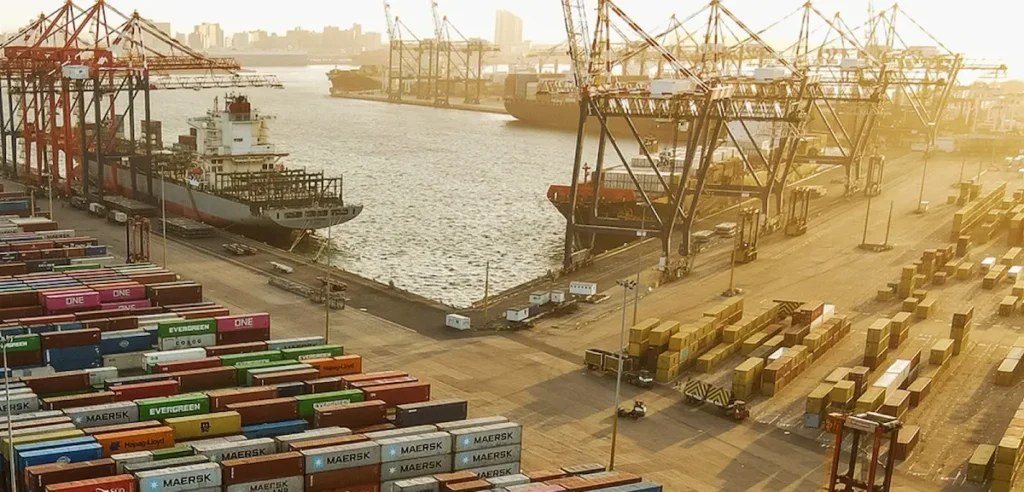

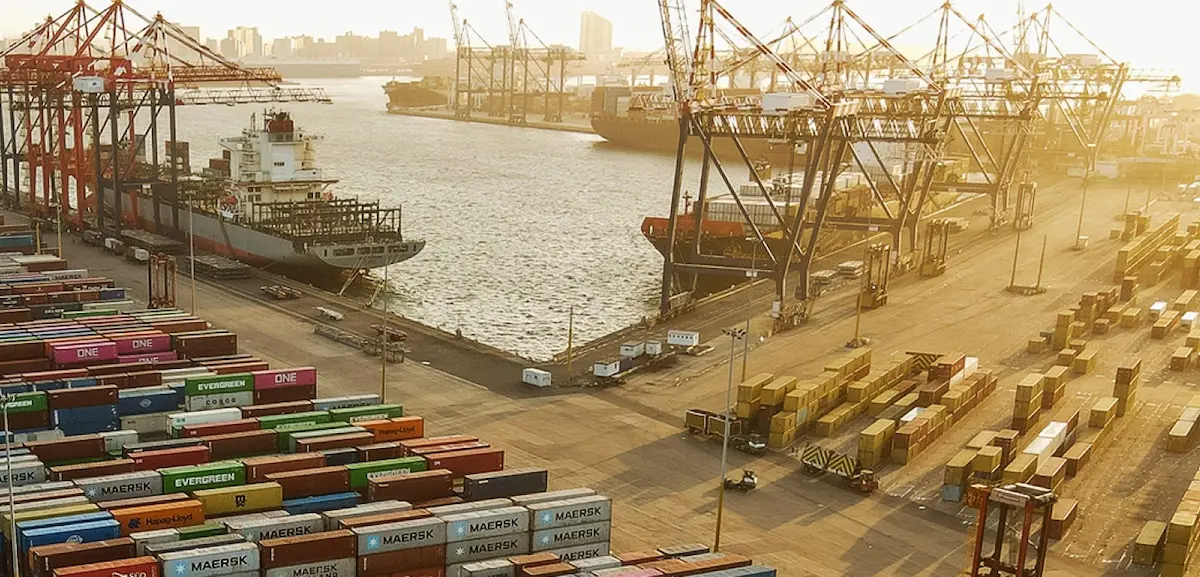
Vessels waiting offshore for days, manufacturers running short of components, and importers facing mounting costs.. The congestion at Durban Gateway Terminal (DGT) has reached a point where Transnet has announced emergency measures to help restore operations at South Africa’s busiest container port..
In a media statement issued on 18 November 2026, Transnet confirmed that it was working with Durban Gateway Terminal, operated by International Container Terminal Services Inc. (ICTSI), to address the vessel backlog through additional berthing capacity, diversions to Ngqura, rail movements, and the return of refurbished cranes at Pier 1..
The announcement follows weeks of growing concern among shipping lines, freight forwarders, cargo owners, and manufacturers over the delays affecting cargo moving through Durban..
How serious is the congestion at Durban..??
The latest figures from the Southern African Association of Freight Forwarders (SAAFF) show that Durban Gateway Terminal (DGT) is handling more containers, but vessels are still experiencing substantial delays..
According to the SAAFF/BUSA Cargo Movement Update No. 308, reported by Africa Ports & Ships on 19 November 2026, DGT handled 36,332 TEUs during the latest reporting week, an increase of 28% over the preceding week and its strongest waterside performance in 4 months..
That works out to approximately 5,190 TEUs per day.. However, average vessel anchorage waiting time increased from 189 hours to 263 hours, or almost 11 days, even as the number of vessels waiting offshore reduced from 14 to 11..
Yard occupancy stood at approximately 69%, while affected supply chains continued to experience additional end-to-end delays exceeding 20 days..
While the figures indicate that DGT has demonstrated the capacity to handle higher volumes, the accumulated vessel backlog remains a serious concern.. For shipping lines and cargo owners, the immediate issue is whether this level of productivity can be maintained long enough to clear the waiting vessels while accommodating new arrivals..
The 28% increase in throughput is encouraging, but the increase in average anchorage time shows how much work remains before vessel schedules and cargo deliveries can return to normal..
What is Transnet doing to clear the backlog..??
Transnet has announced several measures intended to increase handling capacity and move containers out of the port more quickly..
One of the immediate interventions is the allocation of Berth 102 at Durban to vessels equipped with their own cargo-handling gear..
This allows suitable vessels to discharge containers without depending on the ship-to-shore cranes normally used at the main container terminals..
The arrangement also supports the diversion of selected vessels to Ngqura Container Terminal in the Eastern Cape.. Under the proposed arrangement, Durban-bound containers can be discharged at Ngqura and subsequently transported by smaller geared vessels to Berth 102 or Durban’s Point Terminal..
This could reduce the number of vessels waiting to berth at DGT, although the effectiveness of the arrangement will depend on vessel suitability, available feeder capacity, terminal handling arrangements, and shipping lines’ willingness to use the alternative..
But there are commercial considerations because discharging containers at Ngqura and transferring them to Durban introduces another cargo-handling operation and an additional coastal movement..
Shipping lines and cargo owners will need clarity on the revised delivery schedules, additional costs, and responsibility for any charges arising from the diversion..
For cargo already delayed, the additional movement may still be preferable to an extended wait outside Durban..
Pier 1 cranes and equipment availability
Transnet also confirmed that the final ship-to-shore crane undergoing refurbishment at Pier 1 was scheduled for commissioning on 20 November and handover to operations on 21 November..
This would bring all six cranes into operational availability and provide additional capacity to assist with the Durban vessel backlog.. But there is still a wider equipment issue..
Transnet has examined whether compatible equipment could be transferred to DGT from other terminals, but the only suitable equipment identified was at Cape Town Container Terminal and Cape Town Multi-Purpose Terminal..
Both facilities are entering the peak deciduous-fruit export season and cannot currently release equipment without affecting their own operations..
This illustrates how limited spare capacity across South Africa’s container terminal network can complicate recovery when a major terminal experiences operational problems..
Rail evacuation and priority cargo
As per the media statement, Transnet Freight Rail has also made trains available to evacuate import containers destined for Gauteng..
Moving more containers by rail could ease pressure on the terminal’s landside operations, provided the necessary arrangements are in place for container collection, documentation, customs clearance, and delivery at inland destinations..
Transnet is also prioritising essential cargo, including pharmaceuticals and automotive components, before vessels berth to facilitate faster evacuation once the containers are discharged..
This measure is particularly relevant given the impact the delays are already having on South African manufacturers..
Government intervention and the pressure on DGT
Transport Minister Barbara Creecy has acknowledged the seriousness of the situation and the difficulties associated with the transition to the new terminal operator..
In a previous interview reported by Eyewitness News on 18 November, Creecy indicated that ICTSI required assistance and that Transnet was intervening to help restore operations..
She also referred to delays associated with the introduction of the Navis N4 terminal operating system, particularly in relation to truck movements..
The transition to private operational management at DGT has attracted considerable attention because the terminal is central to South Africa’s containerised trade..
And the latest developments raise questions about the preparedness of the terminal for the transition, equipment availability, system implementation, and the ability to maintain productivity during operational change..
According to Moneyweb, Creecy has given ICTSI 3 months to improve performance or risk losing its port licence..
The immediate priority remains clearing the accumulated vessel backlog, but restoring confidence among shipping lines and cargo owners will require consistent operational performance over a sustained period..
Will the emergency measures be enough..??
Many in the industry are cautious about these interventions stating that while the interventions may provide short-term relief it still doesn’t fully resolving the backlog..
The distinction between vessel diversions and terminal productivity is also commercially relevant because while diverting ships to other ports and terminals can reduce the immediate pressure on DGT, the terminal must also be able to consistently handle enough cargo to clear the existing queue while accommodating new arrivals..
Otherwise, the backlog can build again as additional vessels arrive..
The real test now will be how quickly the measures translate into shorter anchorage times, improved vessel turnaround, and reliable container delivery..
The announcement also raises several practical questions :
- How many vessels will actually be diverted to Ngqura..??
- What additional volume can Berth 102 handle..??
- How many containers will move by rail to Gauteng..?? and
- When can cargo owners reasonably expect vessel waiting times to return to manageable levels..??
The answers will determine how much relief the interventions provide.. For importers and exporters, the immediate concern is whether cargo will arrive in time to meet production, delivery, and contractual commitments..
South Africa’s trading community needs regular updates to make informed decisions about shipments already in transit and cargo still awaiting dispatch..
The next few weeks will show whether the additional capacity and operational interventions can produce a sustained reduction in Durban’s vessel backlog..