
Journey 1: How cargo moves
When cargo is moved by a single mode of transport, without using another mode of transport before or after it, then that is unimodal transport..
The most common form of Unimodal transport is road transport when cargo is moved from a seller’s warehouse to a buyer’s warehouse, even if it is cross-border, like it happens in the EU or in Africa, where cross-border movement by road is common..
Even if the cargo is transloaded from one truck to another, it is still a unimodal transport..
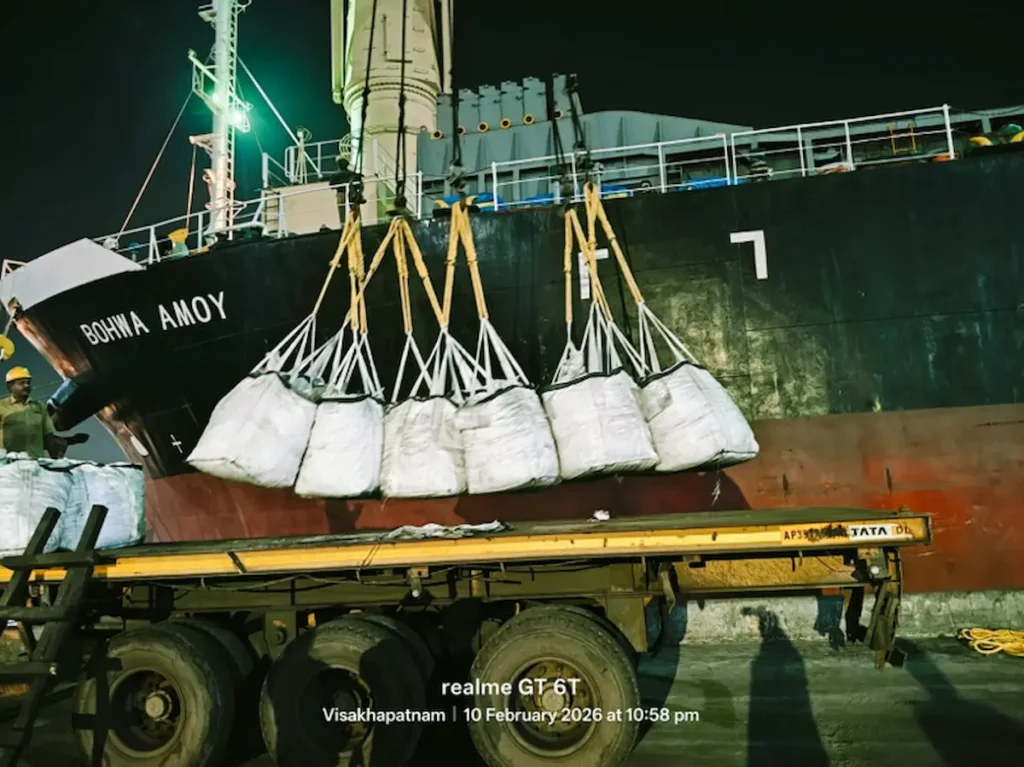
Unimodal movement by sea also happens, but mainly in the shipment of bulk liquid and bulk solid trade where the cargo is delivered to a stockpile/tanks and moved to the ship directly and discharged/offloaded from the ship to the stockpile/silos/tanks on the other end, with no other mode of transport used at either end..
The same Unimodal movement could also apply to rail, although this is mostly for domestic movements, and it is much rarer in exports and only happens in the rare cases on cross-border corridors where both ends have their own siding and no other modes of transport are required..
Journey 2: How the contract moves
Before signing the sales contract, the mode of transport would have been decided with the contract owner, the entity that holds contractual responsibility for the transport arrangement and its execution from A to D..
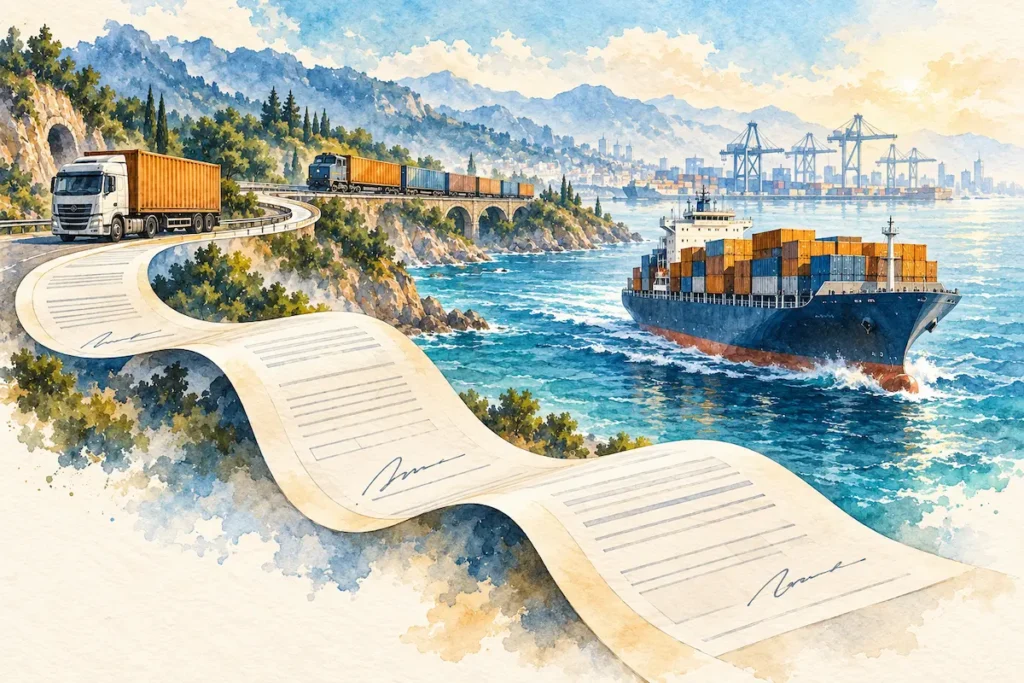
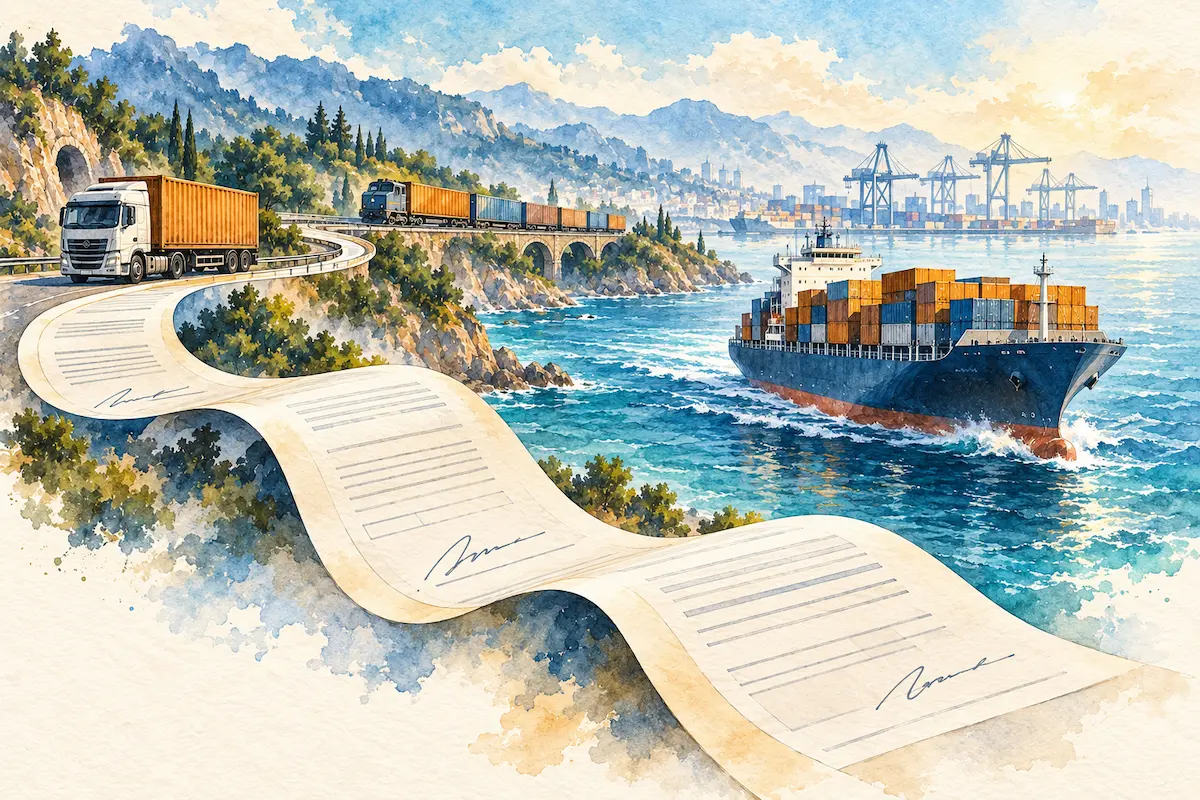
The contract owner would then decide whether they are going to use 1 master “contractor” (think carrier) who has undertaken the full movement from A to D under 1 contract or distribute the contract between 2 or more contractors under different contracts, say from A to B and B to D or A to B to C to D..
It is also possible that the master contractor would use sub-contractors, say, for example A to C and another one from C to D, but the master contract between the master contractor and the contract owner remains 1 and covers only that 1 mode of transport, which is Road..
Each contract covers the agreed part of the journey.. Where one master contractor undertakes the whole movement, its contract covers A to D, irrespective of the number of sub-contractors used..
How Unimodal moves are governed
Different conventions and liability regimes govern the different unimodal moves, and they don’t all work the same way..
By road
International carriage of goods by road for reward is governed by the CMR Convention where the agreed places of taking over and delivery are in two different countries.. AT LEAST ONE of these countries must be a contracting party, subject to the Convention’s scope and exclusions..
The CMR Convention’s geographical coverage includes Europe and parts of Asia and North Africa.. The contract is evidenced by a CMR consignment note..
Elsewhere, including Southern Africa and the Americas, cross-border road carriage is governed by national law and the carrier’s own trading conditions..
But there is a twist here.. If the road movement from A to D includes a stretch where the truck itself is carried by sea ferry, rail or river barge, but the goods are NOT unloaded from the truck, then Article 2 of the CMR Convention keeps the whole carriage under CMR..
Article 30(4) of the 1980 UN Multimodal Transport Convention supports this, as it says carriage of this kind is not to be treated as multimodal transport for States bound by CMR..
So the truck physically crossed the water on a ship and two modes were used, but because the goods stayed in the truck throughout, the contract journey remains unimodal..
However, under Article 2 of CMR, different liability rules may apply if it is proved that the loss, damage or delay happened during the other mode of transport, was not caused by the road carrier, and arose from something specific to that other mode..
The road carrier remains responsible, but its liability is assessed as though the sender had booked the goods directly with the other carrier.. For a sea leg, this could mean Hague-Visby Rules where applicable.. If no legally applicable rules govern that other carriage, CMR remains the basis for the road carrier’s liability..
So CMR governs the contract throughout, but not necessarily the liability outcome on that leg..
By rail
Unimodal transport by rail is governed by the CIM Uniform Rules under COTIF, and the contract is evidenced by a CIM consignment note..
Outside the COTIF states, rail carriage in the CIS, China and Mongolia runs under SMGS, with a combined CIM/SMGS consignment note used to bridge the two where a movement crosses between them..
By water
Sea carriage is governed by the applicable maritime liability regime, most commonly the Hague or Hague-Visby Rules, though these usually apply through national legislation rather than directly.. The contract is evidenced by a bill of lading or a sea waybill..
Whether that sea contract is unimodal or multimodal has nothing to do with how the cargo physically travelled.. It depends entirely on WHAT the carrier has undertaken to carry..
If the shipping line contracts to do only the sea leg, it issues a Port-to-Port Bill of Lading and the contract is unimodal.. The inland legs at both ends are arranged separately by the merchant under merchant haulage, even though the container clearly moved by truck or rail to reach the port..
If the shipping line contracts to do the entire move from the seller’s premises to the buyer’s premises under carrier haulage, then the contract is multimodal, and the document issued is a multimodal transport document.. The line will almost certainly sub-contract the inland movement, but that changes nothing, because the contract between the contract owner and the carrier remains ONE contract from A to D..
Same container, same route, same trucks and same vessel.. The only difference is what is inside the contract..
Qualifying points of Unimodal
- Transloading is when goods are physically moved from one vehicle to another, for example, unloaded from one truck and reloaded onto another.. If both vehicles are trucks, it is still road, still unimodal..
- Cross-docking is a form of transloading where the goods move straight from the incoming vehicle to the outgoing vehicle with little or no storage in between..
- A movement can be unimodal by contract while being multimodal operationally.. The port-to-port bill of lading is the everyday example..
- Unimodal by road is common.. Unimodal by sea or rail is rare and mostly limited to bulk..
Definition of terminologies used in this section
- Contract Owner: The entity that holds contractual responsibility for the transport arrangement and its execution.. Depending on the Incoterms® rule, this could be the seller, the buyer, or each of them for different parts of the journey.. Note that the contract owner is not always the party that physically places the booking, as a freight forwarder acting as agent may do that on their behalf while the contract owner remains the responsible party..
- Master Contractor: The party appointed by the contract owner to undertake the movement under one contract.. In transport terms, this is the carrier, and it takes on the move as principal, meaning in its own name and on its own responsibility..
- Sub-contractors: The parties the master contractor appoints to perform parts of the movement it does not perform itself.. They have a contract with the master contractor, NOT with the contract owner..
- Master Contract: The single contract between the contract owner and the master contractor.. It stays as one contract no matter how many sub-contractors are used underneath it..
- Principal: A party acting in its own name and on its own responsibility, as opposed to an agent acting on behalf of someone else..