
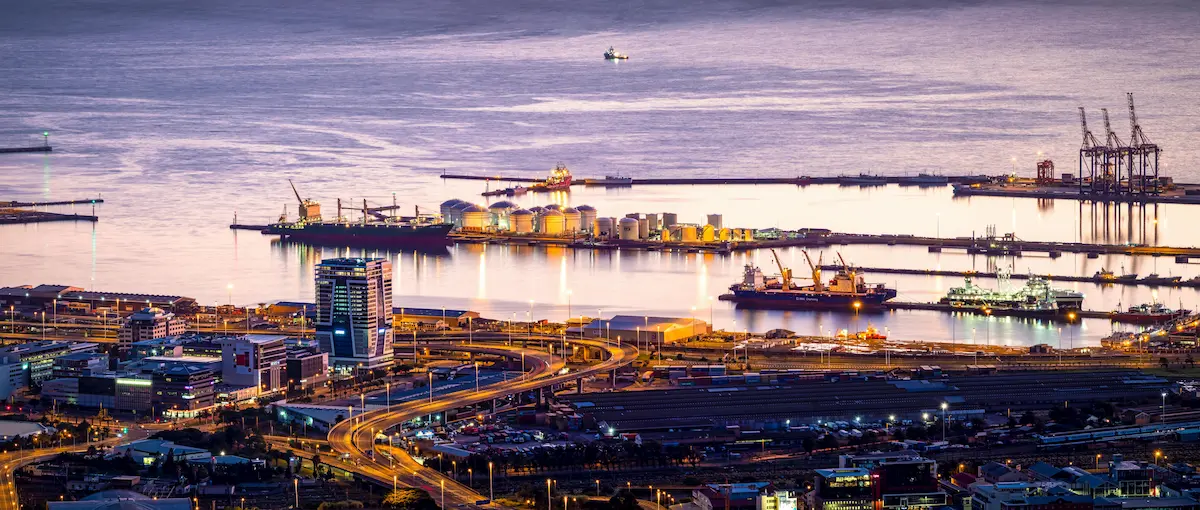
The maritime industry in South Africa is poised for a game-changing transformation following the Port Regulator’s recent announcement in terms of its port tariff application..
Possibly the biggest impact will be that as from April 2025 when the tariffs will come into effect, vessels calling at South African ports solely for bunkers, stores, water, or a combination of these services—with a stay of under 48 hours—will benefit from a 60% reduction in port tariffs..
This proactive decision is a strategic move to position South Africa as a premier maritime hub, driving growth and competitiveness in the sector..
The positive potential for South African ports
Based on the media statement the 2025/2026 tariff reduction presents several advantages:
- Enhanced port competitiveness: By lowering costs for short-duration vessel calls, South African ports become more attractive to shipowners and operators seeking efficient, cost-effective services.. This can encourage more vessels to choose South Africa as a stopover point, especially considering the rerouting of ships from the Red Sea to go around the Cape of Good Hope.. The high port costs especially for bunkering and other non-cargo services have long been an issue for shipowners who could not call South African ports..
- Boost to the economy: Increased port activity directly contributes to job creation and economic growth, particularly in industries like bunkering, marine supplies, and ancillary services..
- Strategic positioning: South Africa’s location along major shipping routes positions it to capitalize on increased traffic.. This decision aligns with global trends of optimizing port efficiency and competitiveness..
- Support for green initiatives: With many vessels transitioning to cleaner fuels, accessible bunkering facilities in South Africa can support environmental sustainability by providing options for refueling and resupplying with minimal environmental impact..
- Broader sectoral growth: Services such as water provisioning, ship stores, and repairs may see increased demand, fostering growth across the maritime value chain..
Challenges and considerations
While the decision is a welcome development, it also brings potential challenges that must be addressed to ensure success:
- Revenue implications for ports: A 60% tariff reduction may impact port revenue in the short term. Ports will need to offset this loss through increased volume and activity..
- Infrastructure readiness: The success of this initiative hinges on whether South Africa’s ports can handle the increased traffic.. Investments in infrastructure, including bunkering facilities and logistics support, will be critical..
- Competition from regional ports: While this move enhances South Africa’s competitiveness, it must outpace regional competitors offering similar incentives to attract vessels..
- Operational efficiency: Ports will need to ensure seamless operations to handle short-duration calls without delays, which requires technological upgrades and streamlined processes..
- Environmental concerns: While supporting green initiatives is a benefit, increased port traffic may also pose environmental challenges.. Adequate safeguards must be in place to minimize the environmental footprint..
Future vision
Close on the heels of the South Africa Shipping Gala, this decision will be pivotal for South Africa’s maritime sector, signaling a commitment to efficiency, growth, and sustainability..
The Port Regulator’s foresight demonstrates leadership in adapting to the needs of the modern shipping industry.. By fostering a competitive and attractive maritime environment, this initiative positions South Africa as a strategic player in global trade and logistics..
To maximize the benefits of this decision, stakeholders across the industry—from shipowners to policymakers—must collaborate to address challenges and leverage opportunities..
Technology, infrastructure, and sustainability investments will ensure long-term success and a thriving maritime ecosystem..
As South Africa charts this promising course, the global shipping community will undoubtedly take notice.. South African ports are ready to unlock their immense potential and cement their status as an important hub in the international maritime landscape..