

Artificial Intelligence (AI) is having its moment in the spotlight, transforming everything from predictive analytics in supply chains to intelligent automation in ports..
But before we get carried away with the AI revolution, it’s worth asking: What lessons can AI take from Blockchain’s journey in shipping and trade..??
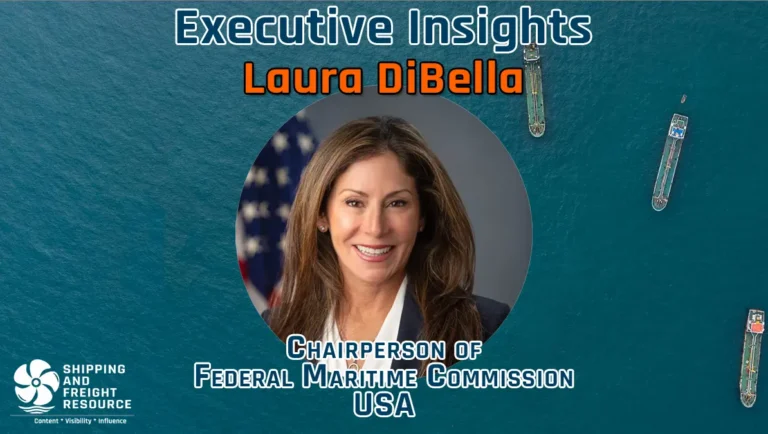
In a recent article, Bertrand Chen raises this important question, reflecting on how Blockchain, once hailed as the game-changer for global trade, hit roadblocks that slowed its widespread adoption..
While Blockchain has made strides, its rollout in shipping and trade wasn’t as smooth as initially envisaged..
AI, now on a similar trajectory of rapid adoption, risks running into some of the same pitfalls if we don’t take a moment to reflect..
So, what should AI leaders and innovators in global trade learn from Blockchain’s playbook..??
Standards and interoperability matter – a LOT
Blockchain’s effectiveness was most likely limited by fragmentation, multiple platforms, lack of standardisation, and poor cross-platform communication..
AI must not make the same mistake.. If different stakeholders in shipping and trade develop isolated AI models that don’t communicate, we’re back to digital silos, just with shinier tech.. Industry-wide data standards are critical for AI’s success..
Adoption without collaboration = Dead End
Blockchain solutions struggled to gain traction when individual companies experimented without collective buy-in from the ecosystem.. AI’s success in shipping and trade depends on industry-wide collaboration, from shippers to carriers, customs to ports, and other interconnected entities.. Without it, we risk disjointed, siloed solutions that fail to scale..
Regulatory alignment cannot be an afterthought
Blockchain’s adoption struggles weren’t just technological, they were also regulatory.. Uncertainty around compliance and accountability slowed its momentum..
AI faces similar challenges, operating in a grey area when it comes to transparency and decision-making.. AI must align with regulators early, ensuring its models are explainable and auditable..
Without proactive engagement, AI in shipping and trade could face the same resistance that hindered Blockchain’s growth..
AI has to prioritise transparency
Blockchain’s biggest strength was its built-in trust mechanism and traceability wherein, every transaction was recorded, and nothing could be tampered with..
AI, on the other hand, is often a black box, nobody knows exactly how some AI decisions are made..
While we can see the input and output of the model, the intricate workings that lead to a particular decision can be difficult to fully understand or explain..
That’s a problem in an industry built on contracts, compliance, and risk management.. AI must integrate transparency, traceability, and ethical safeguards to build the same level of trust..
Conclusion
While AI is displaying all the potential it has to re-engineer global trade, it must proactively understand the pitfalls that hindered the expected adoption of Blockchain..
AI industry must address challenges such as fragmentation, regulatory uncertainty, lack of standardisation, and slow collaboration, issues that limited Blockchain’s impact..
AI must integrate the best lessons from Blockchain’s evolution—particularly around standardisation, interoperability, collaboration, regulatory foresight, and transparency..
With that, AI can move beyond experimentation and become a true enabler of scalable, industry-wide digital transformation in shipping and trade..