
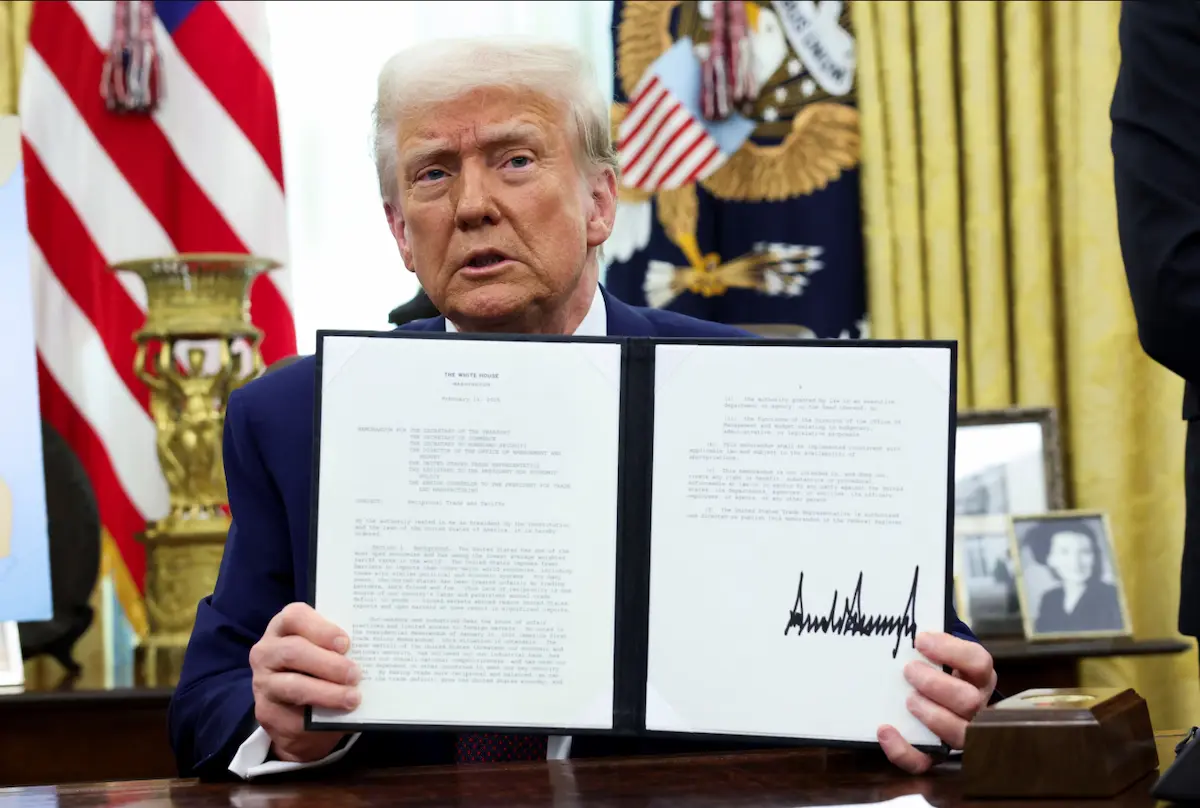
On February 13, 2025, former U.S. President Donald Trump announced a new trade policy centered around “reciprocal tariffs..”
The plan, which he claims will restore fairness in global trade, is designed to ensure that if a country imposes tariffs on U.S. goods, the U.S. will respond with an equal tariff on their exports..
While the idea of reciprocity may seem straightforward, the policy has far-reaching implications for global trade, particularly for China, Southeast Asia, and American businesses reliant on imports and exports..
What are the mechanics of reciprocal tariffs, their differences from retaliatory tariffs, and their impact on key markets, particularly the U.S., China, and Southeast Asia..??
How should businesses prepare for the upcoming April 1, 2025 deadline when Trump’s team is expected to finalise and present its trade strategy..??
Understanding Reciprocal Tariffs vs Retaliatory Tariffs
While both reciprocal and retaliatory tariffs involve imposing duties on imports into the USA, they serve distinct purposes:
- Reciprocal Tariffs: mirror the duties that other countries impose on American goods.. If a nation has a 10% tariff on U.S. steel exports, the U.S. will impose a 10% tariff on steel imports from that country.. The goal is to create a balanced and “fair” trade environment..
- Retaliatory Tariffs: are punitive measures aimed at countering specific trade actions deemed harmful to the U.S. economy.. For example, during the U.S.-China trade war (2018-2020), the U.S. imposed retaliatory tariffs on billions of dollars’ worth of Chinese goods in response to intellectual property theft and forced technology transfers..
While Trump’s policy is being framed as reciprocal rather than retaliatory, it could easily escalate into a full-fledged trade conflict if other nations retaliate..
Key aspects of reciprocal tariff plan
A statement from The White House read
“AMERICA WILL NO LONGER TOLERATE UNFAIR TRADE PRACTICES: The United States is one of the most open economies in the world, yet our trading partners keep their markets closed to our exports. This lack of reciprocity is unfair and contributes to our large and persistent annual trade deficit.”
The “Fair and Reciprocal Plan” and the “Reciprocal Trade and Tariffs” memorandum outline below key points that is expected to be followed from the 1st of April 2025..
- Equal tariffs on U.S. exports and imports: If a country imposes a tariff on American goods, the U.S. will respond with an identical tariff on their exports..
- VAT consideration: Nations with Value-Added Taxes (VAT) may be treated as if they have built-in tariffs, though it remains unclear how this will be applied..
- Non-monetary trade barriers will be treated like tariffs: Regulatory policies, licensing restrictions, and other market access limitations could lead to tariff penalties..
- Government subsidies under scrutiny: If foreign governments subsidise their industries in a way that harms U.S. businesses, the U.S. may impose tariffs to neutralise the advantage..
- Crackdown on Transshipment: Goods rerouted through third-party countries to evade tariffs will be blocked or penalised..
The plan also provides a clear off-ramp or exit strategy, i.e., if a country lowers its tariffs on U.S. goods, the U.S. will follow suit..
Unlike the previous tariffs on China, these measures will not be enacted immediately.. Trump has set a deadline of April 1, 2025, for his economic team to finalise recommendations..
How does this affect global markets..??
United States: Short-term inflation and business uncertainty
Economists have expressed concern that the implementation of higher tariffs on imports from key suppliers—such as China, Vietnam, Mexico, and the European Union—could lead to increased costs for both businesses and consumers..
This is due to the higher expenses associated with imported goods, which may be passed down the supply chain..
-
Industries most affected: Sectors including electronics, automobiles, raw materials (such as steel and aluminum), and agricultural imports are expected to experience significant impacts due to their reliance on imported components and materials..
-
Supply chain disruptions: Companies dependent on foreign-made components may face delays or increased costs, prompting a reevaluation of supply chain strategies..
-
Consumer price increases: Elevated import costs are anticipated to be passed on to consumers, contributing to rising inflation rates..
While President Trump has acknowledged the possibility of short-term inflation, he has downplayed the risks, stating, “Long-term it’s going to make our country a fortune“..
China: A renewed trade war..??
The announcement of reciprocal tariffs intensifies the already escalating trade tensions between the U.S. and China.. On February 13, 2025, President Trump announced plans to implement “reciprocal tariffs” on nations that impose tariffs on American goods, aiming to ensure fairness in international trade..
In response, China has indicated that it will respond proportionately to any new tariffs imposed by the U.S., potentially impacting trade flows across multiple sectors..
Southeast Asia: Unintended consequences for regional exporters
Southeast Asian nations, particularly Vietnam, Malaysia, and Indonesia, have previously benefited from U.S.-China trade tensions, as companies shifted production away from China to avoid tariffs..
However, the new U.S. policy on reciprocal tariffs could place these countries under increased pressure..
Vietnam’s steel tariff negotiations: Vietnam has already been subjected to a 25% U.S. tariff on steel exports and is currently engaged in discussions to prevent further trade restrictions..
Indonesia’s Nickel market under scrutiny: Indonesia, which controls a significant portion of the global refined nickel market, is being closely monitored as U.S. protectionist policies may affect its critical metals trade..
The risk for Southeast Asia is that if these nations maintain higher tariffs on U.S. goods, they could become targets of reciprocal tariffs, diminishing their competitive advantage in global supply chains..
In summary, the implementation of reciprocal tariffs by the U.S. is poised to create significant shifts in global trade dynamics, with potential economic repercussions for both domestic and international markets..
Below is what is in store for Exporters and Importers in the USA
Exporters (China, Southeast Asia, EU, Mexico)
- Increased U.S. tariffs make products less competitive..
- Higher costs may lead businesses to shift focus to alternative markets..
- Reciprocal tariffs mean any foreign tariff increase could trigger an automatic U.S. response..
U.S. Importers and domestic businesses
- Higher costs for imported goods could raise inflation and consumer prices..
- Supply chain diversification may be needed to minimise exposure to tariff-heavy markets..
- Businesses should monitor U.S. trade negotiations and prepare for potential pricing adjustments..
Fair trade or economic conflict..??
Trump’s reciprocal tariff plan is positioned as a tool to ensure fairness in trade, but its implementation could have unintended consequences..
If foreign governments push back against U.S. demands, this could lead to more trade restrictions, rather than fairer market conditions..
As the April 1 deadline approaches, businesses must remain agile, preparing for potential supply chain disruptions and price volatility..
Whether this strategy restores balance or triggers a new wave of trade conflicts remains to be seen—but one thing is certain: global trade is entering a new era of uncertainty..