
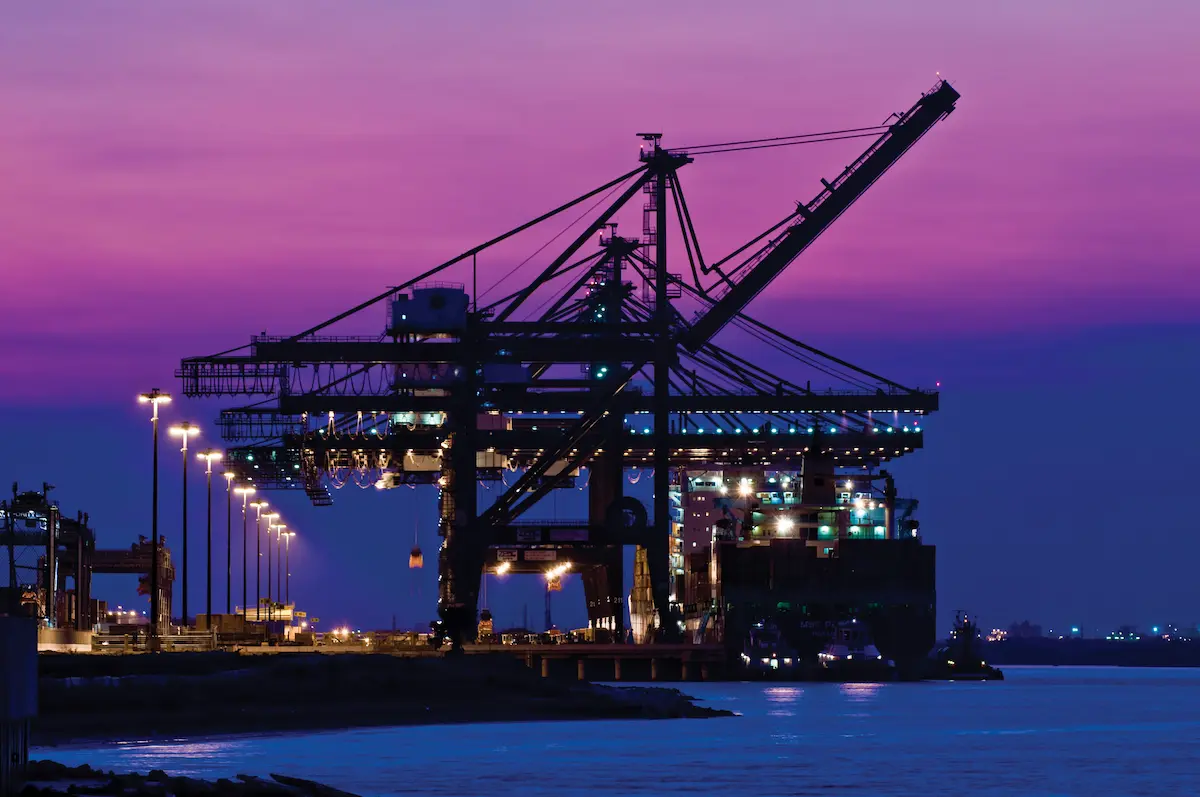
Automated Rail-Mounted Gantry (RMG) cranes, first introduced in the early 2000s and becoming more widespread by 2007, have significantly enhanced efficiency in container handling at ports by automating many tasks traditionally performed by human labor.
The advent of RMG automation has revolutionized the logistics and shipping industry, offering substantial advantages in terms of efficiency, precision, and capacity. However, these benefits come with notable challenges, particularly regarding labor relations and economic impacts.
This issue is central to the pending International Longshoremen’s Association (ILA) strike, highlighting the complex interplay between technological advancement and labor dynamics.
Advantages of RMG Automation
- Increased Efficiency:
- Higher Throughput: Automated RMGs can handle a significantly higher volume of containers compared to traditional cranes. This increased throughput is crucial for busy ports that need to manage large amounts of cargo quickly.
- Faster Operations: The automation and advanced control systems of RMGs enable faster loading and unloading of containers, reducing the time ships spend in port and increasing overall port efficiency.
- Enhanced Precision:
- Accurate Placement: Automated RMGs are equipped with sophisticated sensors and control systems that allow for precise placement and retrieval of containers. This reduces the risk of damage to cargo and equipment.
- Consistency: Automation ensures consistent performance, minimizing human error and improving the reliability of port operations.
- Space Optimization:
- Vertical Storage: Automated RMGs can stack containers higher and more efficiently than traditional methods, optimizing the use of available space. This is particularly beneficial for ports with limited real estate.
- Reduced Footprint: By operating in tighter spaces, automated RMGs reduce the need for extensive infrastructure expansion, allowing ports to handle more cargo without significant physical growth.
- Safety Improvements:
- Reduced Human Involvement: Automation reduces the need for human workers to be in potentially hazardous areas, decreasing the risk of accidents and injuries.
- Remote Operation: Many automated RMGs can be operated remotely, further enhancing safety by keeping operators out of harm’s way.
Costly Challenges
- High Initial Investment:
- Capital Expenditure: The cost of purchasing and installing automated RMGs is substantial. This includes the cost of the cranes themselves and the necessary infrastructure modifications, such as reinforced foundations and upgraded power supplies.
- Training Costs: Operators and maintenance personnel need specialized training to handle the new technology, adding to the initial investment.
- Maintenance and Upkeep:
- Regular Maintenance: Automated RMGs require regular maintenance to ensure they operate efficiently and safely. This includes routine inspections, part replacements, and software updates.
- Downtime Costs: Maintenance activities can lead to downtime, which can be costly for ports that rely on continuous operations. Unplanned maintenance due to equipment failure can be particularly disruptive.
- Labor Disputes:
- Job Security Concerns: The shift towards automation has led to significant concerns among labor unions about job security. Workers fear that increased automation will lead to job losses and reduced opportunities for employment.
- Negotiation Stalemates: As seen with the pending ILA strike, negotiations between labor unions and port operators can become contentious, particularly regarding job protections and the impact of automation on the workforce.
- Technological Dependence:
- Reliability Issues: Ports become heavily dependent on technology, and any technical issues or failures can have a significant impact on operations.
- Cybersecurity Risks: As with any automated system, RMGs are vulnerable to cybersecurity threats. Ports must invest in robust cybersecurity measures to protect their operations from potential attacks.
Sticking Issue with Pending ILA Strike
The pending ILA strike underscores the friction between technological advancements and labor interests.
Ramifications of Automation on Job Opportunities and Surrounding Areas
- Job Displacement:
- Reduced Workforce: Automation can lead to a reduction in the number of workers needed, resulting in job losses for those whose roles are replaced by machines. This displacement can be particularly challenging for older workers or those with specialized skills that are no longer in demand.
- Skill Shifts: Workers may need to acquire new skills to operate and maintain automated systems, which can be a barrier for some. Retraining programs and continuous education have become essential to help workers transition to new roles within the industry.
- Economic Impact:
- Local Economies: Job losses can negatively impact local economies, particularly in areas heavily reliant on port operations for employment. Reduced income for workers can lead to decreased spending in local businesses, affecting the broader economic ecosystem.
- Wage Pressure: Automation can lead to wage stagnation or reduction as the demand for certain types of labor decreases. This can create economic disparities and affect the standard of living for affected workers.
- Community Disruption:
- Social Strain: Job displacement can lead to increased social strain, including higher unemployment rates and reduced community cohesion. Families may face financial instability, leading to broader social issues such as increased reliance on social services.
- Support Services: Communities may need to invest in support services such as retraining programs, unemployment benefits, and mental health services to mitigate the impact of job losses. These services are crucial for helping displaced workers adapt to new employment opportunities and maintain their well-being.
President-Elect’s Support for ILA Position
President-Elect Donald Trump has expressed support for the ILA’s position, emphasizing the need to balance technological advancements with job protection and fair labor practices. This support highlights the importance of addressing the human impact of automation and ensuring that workers are not left behind in the pursuit of efficiency and progress.
Conclusion
RMG automation presents a dual-edged sword for the logistics and shipping industry. While it offers significant benefits in terms of efficiency, precision, and safety, it also poses substantial challenges, particularly regarding labor relations and economic impacts.
The pending ILA strike serves as a stark reminder of the need to balance technological progress with the protection of workers’ rights and livelihoods.
As ports continue to adopt automated systems, it is crucial to implement strategies that mitigate the negative impacts on workers and communities, ensuring that the transition to automation is both equitable and sustainable.