
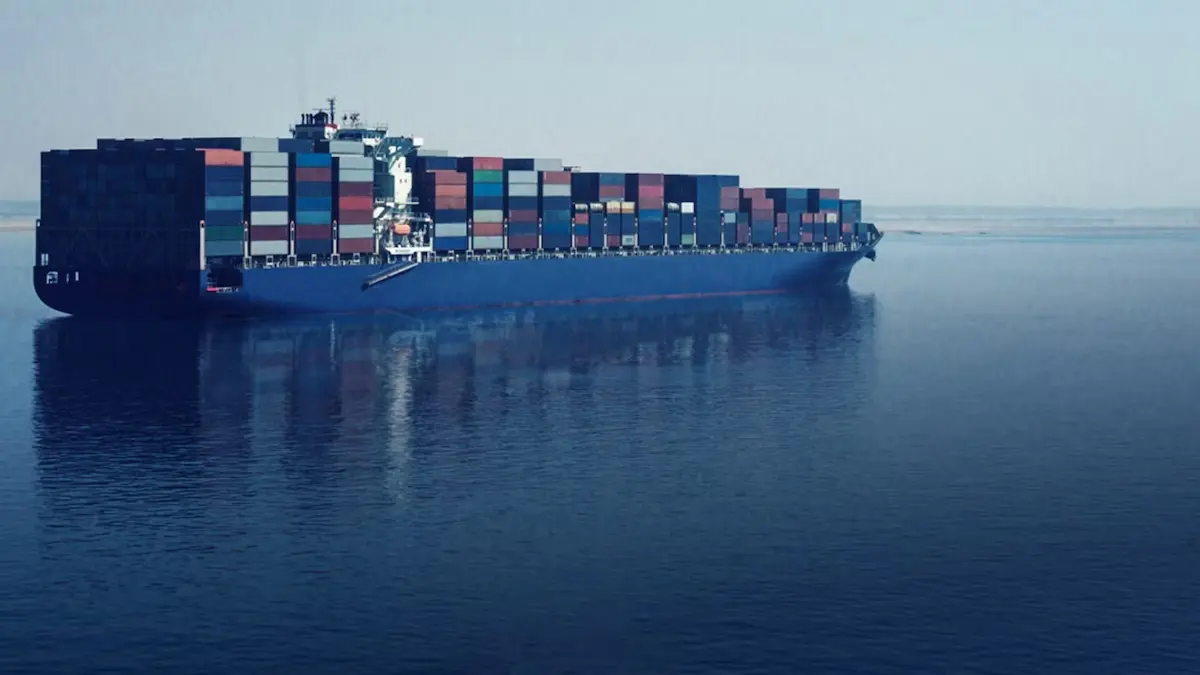
Maersk, the world’s 2nd largest container line by size, has announced that its Middle East to US East Coast (MECL) service will make a structural return to the Trans-Suez route, following what the company describes as continued stabilisation of conditions in and around the Red Sea and the Suez corridor.
The update was issued to customers on 15 January 2026 and applies specifically to the Maersk-operated MECL service, which connects the Middle East and India with the US East Coast.
According to Maersk, the decision reflects improved stability and reliability in the region, allowing the carrier to reinstate the original service pattern designed to deliver shorter and more efficient transit times.
Scope of the MECL service
The MECL service is solely operated by Maersk and forms part of its East-West network, linking ports in the Middle East and India with key destinations on the US East Coast.
During periods of heightened security risk in the Red Sea region, Maersk, along with several other carriers, had rerouted services around the Cape of Good Hope, extending voyage distances and transit times.
The return to Trans-Suez routing represents a reversal of that operational adjustment for MECL.
Implementation timeline
Maersk confirmed that the structural return to the Trans-Suez route will apply to all vessels operating on the MECL service.
For westbound sailings, the first vessel to operate via the Trans-Suez route will be the Cornelia Maersk, voyage 603W, departing Jebel Ali on 15 January 2026.
For eastbound sailings, the Maersk Detroit, voyage 602E, departing North Charleston on 10 January 2026, will be the first vessel to use the Trans-Suez route, with all subsequent eastbound sailings following the same routing.
Impact on transit times
Maersk stated that the Trans-Suez route represents the fastest and most efficient routing for the MECL service.
As a result of the routing change, customers are expected to benefit from a reduction in transit times of approximately one week on affected sailings.
For westbound services, the shorter transit times are expected from the Maersk Kensington, voyage 607W, onwards. For eastbound services, the reduced transit times apply from the Maersk Detroit, voyage 602E, onwards.
Maersk noted that sailings prior to these voyages will not experience changes in transit times.. This approach is intended to provide customers with additional time to adjust supply chain planning and inland logistics arrangements.
Ongoing security monitoring
While confirming the return to the Trans-Suez route, Maersk emphasised that the decision remains dependent on continued stability in the Red Sea region.
The carrier stated that it will continue to monitor the security situation closely and that the safety of crew, vessels, and customer cargo remains its highest priority.
Maersk also confirmed that contingency plans remain in place. Should conditions deteriorate or regional conflict escalate, individual MECL sailings, or the broader service structure, could revert to routing via the Cape of Good Hope.
Guidance for customers
Maersk has advised customers using the MECL service to review their upcoming bookings and coordinate with supply chain partners to align inland logistics with the revised transit times.
Customers have also been encouraged to monitor Maersk’s Red Sea situation updates via the company’s website for the latest operational guidance and security-related information.
Broader network implications
At the time of the announcement, Maersk confirmed that no additional structural changes are planned for its wider East-West network.
The company stated that any future changes, should conditions evolve, will be communicated promptly and transparently to customers.
Summary
In summary, Maersk has confirmed a structural return of its MECL service to the Trans-Suez route, citing improved stability in the Red Sea region.
The change is expected to reduce transit times by approximately one week for affected sailings, with implementation beginning in mid-January 2026.
The carrier has reiterated that routing decisions remain subject to security conditions and that contingency plans remain in place should circumstances change.