
We’ve all had the experience of a lively fly or mosquito making its presence known on a warm summer evening – impossible to ignore and always catching our attention..
Digitalisation in our industry has become a bit like that.. Ever-present, constantly buzzing with energy and benefits and a topic that keeps sparking curiosity and conversation..
Digitalisation dominates discussions in boardrooms, conference halls, watering holes, and of course, across the internet..
In this article, I look into digitalisation, but in a refreshing twist, steer away from the usual bytes, chips, and tech talk and focus on the human side of digitalisation, the transformation that make it truly impactful..
What does it mean by human side of digitalisation..??
At its core, digitalisation isn’t just about technology for technology’s sake.. It is also about us, the people..
Digitalisation is about how we approach and apply it and how we shape our lives around it, how it defines or redefines our relationships, and reimagining how we connect with one another..
A relatable example for all of us would be that just a few years ago working from home was an exception, but in just a few years, it has become a reality for several people including big corporates..
I have seen first-hand how this transformation has allowed people, including me, to reclaim hours of commuting, improve productivity and efficiency, and reduce stress levels (at least sometimes when your kids or pets are not in your face or on your lap all the time)..
For every benefit that digitalisation brings, it also brings human challenges to mirror it.. Transformation requires and demands balance, discipline, and the ability to set boundaries because we could just as easily lose ourselves in our endeavour to compensate for the time saved.. We as humans are not yet fully programmed for it..
Fear
The other human side of digitalisation is “fear”.. Fear that machines or technology will take our jobs, fear of becoming redundant, fear of being proven wrong by a machine, fear or competing with a machine..
These fears may or may not be unfounded.. There are examples of both..
 Let’s take a positive example of digitalisation – the vending kiosks at certain McDonalds outlets.. When that concept started, there was immediate fear that the order takers at the counter were going to lose their jobs..
A recent study in the USA found that in stores that had kiosks, orders increased substantially, so much so, the order takers were delegated to kitchen duties to ensure that the orders flowed to meet the increased demand..
This shows us that we should not forget that WE, the Humans, are the ones who invented the machines or technology that we so fear.. We made it to help us, so let it help us..
At this stage, we need to reskill, upskill, and support ourselves in this transformation..
Circle of life
While the may be the case currently, I have another view of digitalisation and how it affects our world, and how our connectivity may come full circle quickly..
As we all know, in a very short span of time, accelerated by COVID-19, we moved from conducting face-to-face meetings to having full-on video discussions and virtual conferences..
Smart devices are listening to everything we say, making us buy things we don’t need, AI is taking notes and summarising our action points..
But I foresee a time very soon when we will no longer be able to separate the real from the virtual.. We won’t know whether we are talking to a real person in a Teams Meeting or a deepfake or a bot and pretty soon I foresee that we will be back to face-to-face meetings, writing down stuff in books to keep us sane and avoiding any ambiguity..
Just like humans, digitalisation will also evolve and we humans need to evolve more to keep pace with digitalisation..
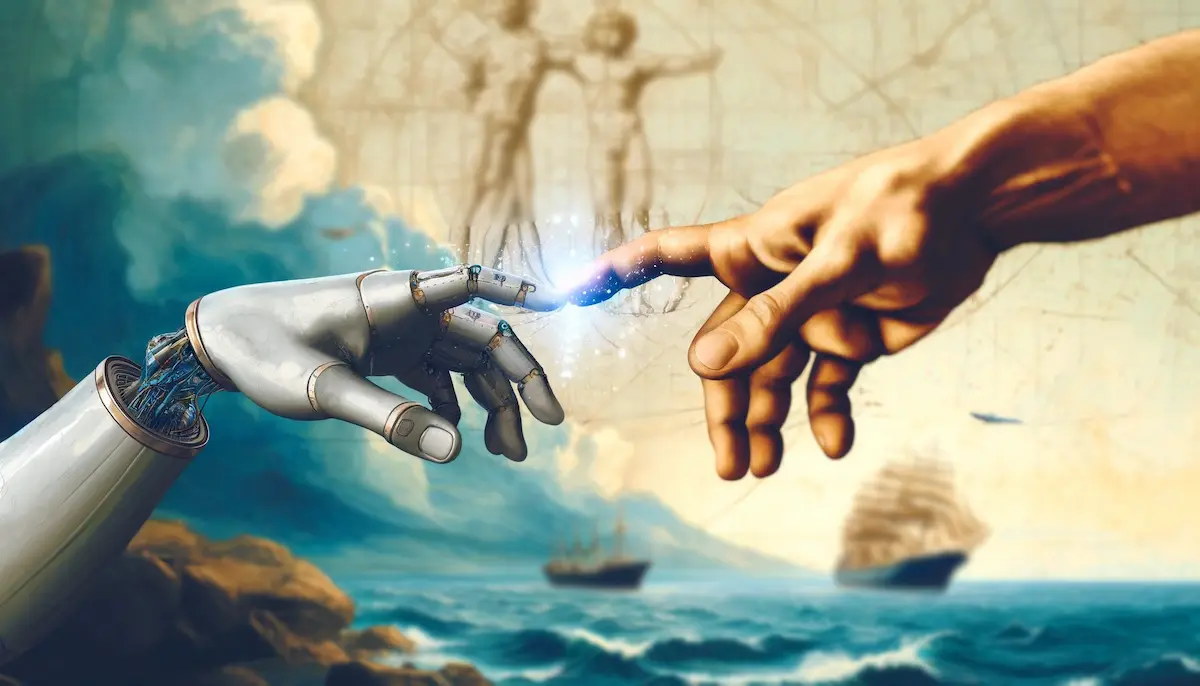
Lifelong learning is no longer a choice but a necessity and as my favourite polymath Leonardo Da Vinci said, “Learning never exhausts the mind”.. We must all remember this..
The McDonalds example also goes to prove that humans can evolve and adapt just as we have been doing for millennia..
Conclusion
As we embrace digitalisation, let us make sure that we don’t lose ourselves in the process and remember that transformation is about more than systems and processes—it’s about humans..
We hold the power to shape digitalisation, to harness it for good, and to make it serve us—not the other way around..
What role can we play in making digitalisation more human..?? How can we ensure that every click, every byte, every digital leap, ultimately serves to enhance, not diminish, the human spirit..??
Share your view in the comments..