
For years, businesses have been drowning in unnecessary bureaucracy when it comes to international trade.. Fraud, duplication, and outdated documentation processes continue to make cross-border transactions slow, expensive, and frustrating..
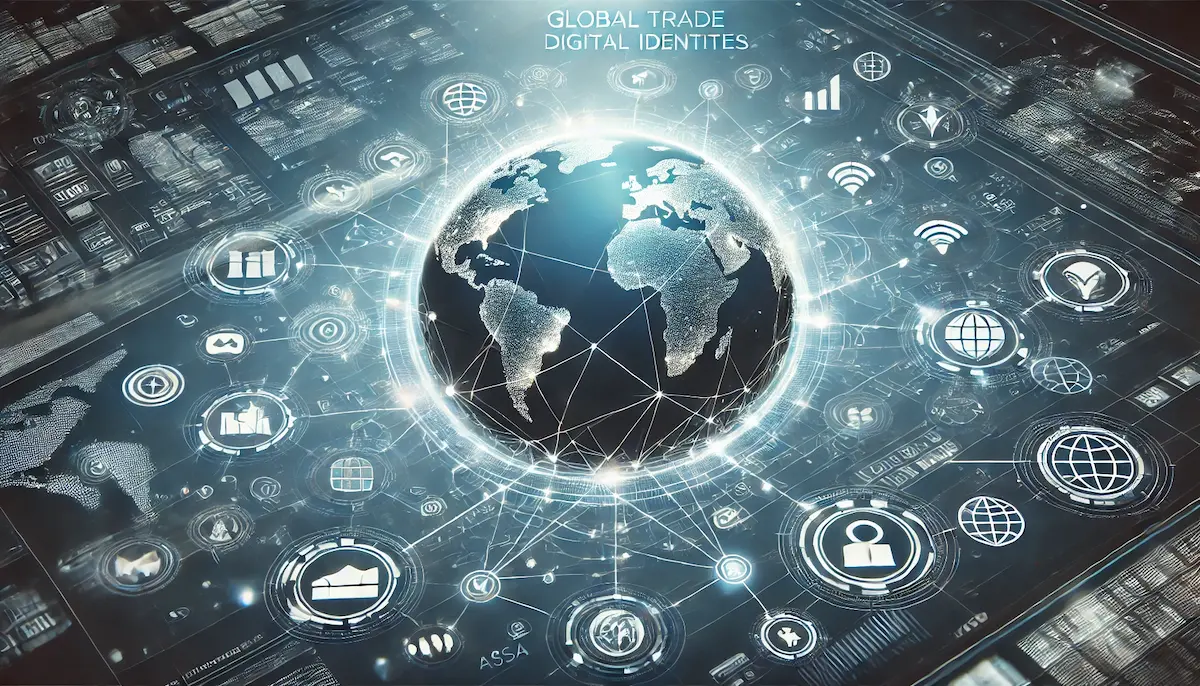
While trade digitalisation has progressed, one key element is still missing, a universal digital identity system that works across jurisdictions..
Commenting on the release of ICC UK’s recommendations to Governments on “Establishing an interoperable digital identity framework for cross border trade”, Chris Southworth, Co-Founder / Director of The Centre for Digital Trade and Innovation (iC4DTI) said “Digital identities are critical for future trade. They connect the legal entity of a business to everything that is moving cross border and happening on the border – finance, contracts, payments, settlement, shipment.”
The paper proposes a simple, scalable framework where every business is assigned a 20-digit digital identity, tied to national company registries and plugged into the Global Legal Entity Identifier Foundation (GLEIF)..
As per Southworth, this could completely transform trade, making it faster, cheaper, and more secure, without requiring costly new infrastructure..
Why is an interoperable digital identity necessary..??
The biggest problem in global trade today is fragmentation.. Every country has its own company registry, its own financial regulations, and its own approach to verifying businesses..
Banks and logistics providers also have their own systems, making even the simplest cross-border transaction a bureaucratic nightmare.. The more parties involved in a supply chain, the more complex and time-consuming the process becomes..
For large corporations, navigating this is frustrating but manageable.. For MSMEs, however, it can be a dealbreaker..
Smaller businesses often lack the resources to handle lengthy verification processes, and in many cases, they cannot secure financing or partnerships simply because the paperwork is too complex..
Beyond inefficiency, the lack of a trusted global identity system creates space for fraud, tax evasion, and financial crime..
Without a universal, verifiable business identity, bad actors can manipulate trade flows and exploit loopholes, while legitimate companies face an uphill battle just to prove who they are..
A practical solution that doesn’t break the system
Governments and industry bodies have attempted to solve this issue before, but most solutions haven’t scaled.. Either they require massive infrastructure changes, are too expensive to implement, or fail due to political resistance.. This approach, however, is different..
Rather than building something entirely new, this model enhances existing systems.. National company registries—such as Companies House in the UK—would simply issue an LEI alongside the company registration number..
That 20-digit identifier, already an internationally accepted standard, would instantly connect businesses to a global verification system covering finance, payments, contracts, customs, and logistics..
Unlike previous attempts at identity standardisation, this model:
- Does not require new infrastructure—it only adds a single field to existing company records..
- Is cost-effective—governments incur almost no expense, as it builds on existing architecture..
- Is fully interoperable—no data localisation issues, and companies can be verified instantly across borders..
With a simple API connection, company registries would link directly to GLEIF’s global database, ensuring that every registered business has a globally recognised, verifiable identity overnight..
How LEIs will change global trade
An LEI (Legal Entity Identifier) is not just a number—it’s a game-changing tool that could redefine global business verification..
With an LEI, businesses can:
- Be instantly verified in financial transactions, contracts, and supply chain operations..
- Reduce compliance burdens for banks, insurers, and customs authorities..
- Ensure trust and transparency in cross-border dealings..
A vLEI (verifiable Legal Entity Identifier) adds an additional layer of security, allowing real-time, cryptographically secure authentication of businesses and their representatives..
In the digital trade landscape, this is becoming increasingly important—companies need to know exactly who they are dealing with before entering into transactions..
Once embedded into national company registries, LEIs would function much like domain names in the internet world.. Any business could be instantly identified at the click of a button, eliminating the need for repetitive compliance checks and enhancing trust across global supply chains..
Is this the breakthrough the trade world needs..??
The foundation for digital trade already exists.. The technology has been proven, and the framework is ready to be implemented.. The only missing piece is political will..
“We have spent 3 years analysing the issues and looking at options. This paper is, we think, a practical, viable solution for world trade that can be delivered quickly if we all support it.” said Southworth..
Governments have an opportunity to position themselves as leaders in secure, seamless, and digital-first global trade.. If adopted widely, this LEI-based model could become the default identity verification system for businesses worldwide..
The ICC United Kingdom, the Department for Business and Trade, and Barclays Trade Digitalisation Taskforce have outlined a clear roadmap for implementation..
Now, it’s just a matter of whether decision-makers are ready to act..
What do you think..?? Could this finally be the solution global trade has been waiting for..?? Let’s get the conversation going..