
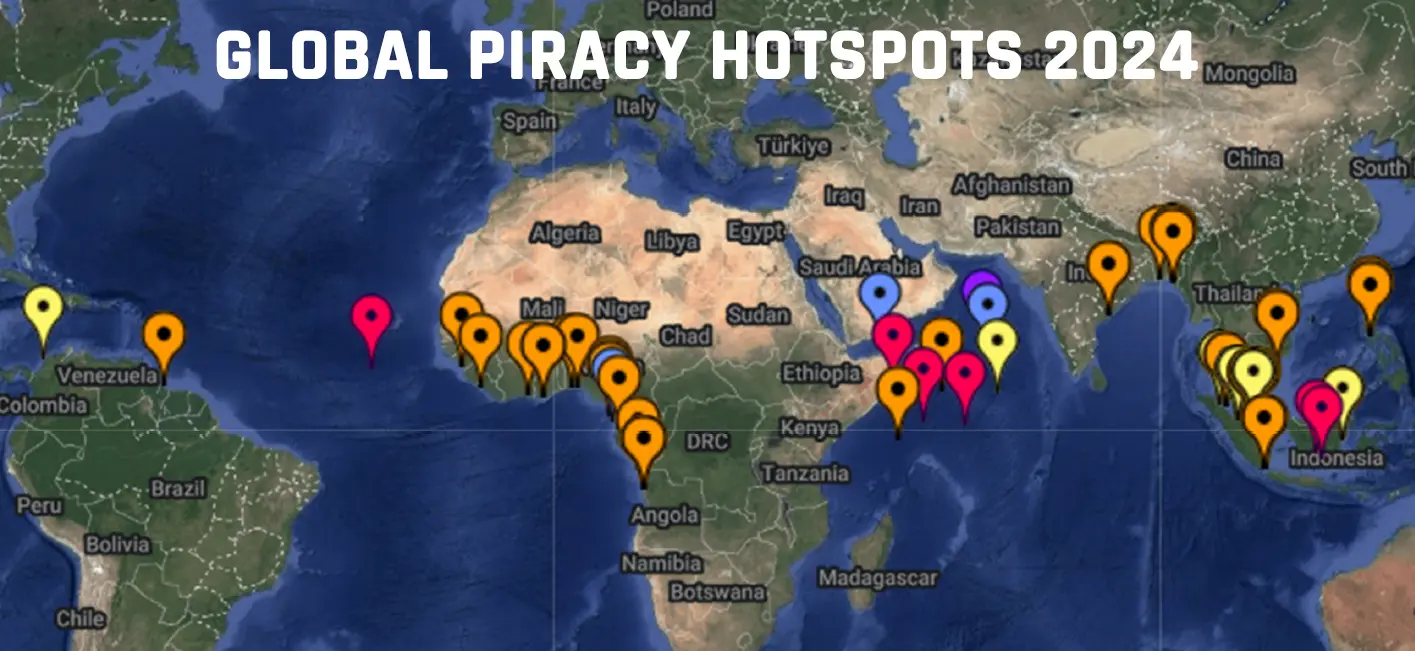
The maritime industry, vital to global trade, continues to face security challenges in the form of piracy and armed robbery.
According to the 2024 IMB Piracy and Armed Robbery Report, there were 116 reported incidents worldwide, a slight decline from 120 incidents in 2023. Here is a look into the report’s key findings, with a focus on regional trends, types of incidents, and their impact on seafarers and vessels.
Global overview
In 2024, the global overview showed a mixture of trends with the reported incidents including :
- 94 vessels boarded,
- 13 attempted attacks,
- 6 hijackings, and
- 3 vessels fired upon.
While the overall number of incidents remains consistent, the increase in crew hostages from 73 in 2023 to 126 in 2024 is alarming.
Similarly, the use of firearms in attacks rose to 26 incidents, up from 15 in 2023, underscoring the growing risks for seafarers.

Commenting on the report, ICC Secretary General John W.H. Denton AO said “While we welcome the reduction of reported incidents, the ongoing threats to crew safety remain a significant concern.
Safeguarding routes and ensuring the security of seafarers, who are essential to maintaining global commerce, is vital.
Every effort must be made to protect lives at sea while ensuring the seamless flow of goods through international supply chains. This requires a collaborative effort, with continued regional and international naval presence being crucial to this endeavour.”
Key hotspots and regional insights
Southeast Asia
Southeast Asia, particularly the Singapore Straits, remained the most active region, with 43 incidents, representing 37% of the global total. The incidents often occurred at night and involved opportunistic theft. A concerning 93% of targeted vessels were successfully boarded, with large vessels such as bulk carriers and tankers frequently targeted.
West Africa (Gulf of Guinea)
The Gulf of Guinea witnessed a significant drop in incidents to 18 in 2024, compared to 22 in 2023. However, this region remains one of the most dangerous due to high-profile crew kidnappings, accounting for all 12 crew abductions globally.
Bangladesh and Indonesia
Incidents in Bangladesh reached their highest in a decade, with 14 attacks, primarily at Chattogram Anchorage. Meanwhile, Indonesia recorded 22 incidents, including two cases of piracy involving hijacked barges and stolen cargo.
IMB Director Michael Howlett said, “Despite the restrained activity, there is no room for complacency as ongoing threats to crew safety highlight the importance of continued caution. Masters and vessel operators are strongly encouraged to strictly adhere to all recommendations in the Best Management Practices while transiting the Gulf of Guinea and waters offEast Africa.”
Types of attacks, weapons, and strategies
The report categorised incidents based on the weapons used:
- Knives were the most common, reported in 39 incidents.
- Guns featured in 26 cases, an increase from previous years.
- Other weapons and improvised tools also played a role in three incidents..
Attackers typically targeted vessels underway or anchored, with 47 incidents reported while steaming, and 41 at anchorages.
The human cost and impact on seafarers
The human toll of piracy cannot be overstated. In 2024:
- 126 crew members were taken hostage.
- 12 were kidnapped, and 1 was injured during attacks.
- Many incidents also resulted in psychological trauma and operational disruptions for vessels and their crews.
Positive trends
The report highlights some positive trends:
- Increased naval patrols and Best Management Practices (BMP) adherence have reduced incidents in West Africa and Somalia.
- Collaboration between the Indonesian Marine Police and the IMB has significantly lowered the risks in specific areas of Southeast Asia.
- Enhanced use of Global Maritime Distress and Safety Systems (GMDSS) has improved early warnings and crisis responses.
Future outlook and recommendations
To mitigate piracy risks, the IMB recommends:
- Strict adherence to BMP guidelines, especially in high-risk zones like the Gulf of Guinea.
- Enhanced crew training and vigilance, particularly during nighttime transits.
- Greater investment in shipboard technologies, such as automated monitoring systems and real-time threat detection.
- Increased international cooperation, including coordinated patrols and shared intelligence.
Conclusion
While the maritime industry has made strides in reducing the overall number of incidents, challenges remain, particularly in protecting seafarers and ensuring safe navigation in high-risk regions. As the IMB Piracy and Armed Robbery Report for 2024 underscores, addressing these threats requires continuous vigilance, collaboration, and innovation.
By understanding these trends and implementing robust security measures, the industry can take significant steps toward a safer future for global trade.