
The modern supply chain is an intricate network of interconnected entities, organisations, enablers, platforms, regulatory authorities, governments, and, most importantly, people, all working together to keep global trade flowing..
This vast, interdependent network keeps global trade moving, and understandably, when one part of the system faces disruption, the effects ripple across industries and economies..
One of the most effective ways for industry stakeholders to come together to overcome these disruptions, bridge gaps, share knowledge, and drive meaningful change in this space is through industry events which are no longer just about networking..
Industry events serve as critical forums for collaboration, and learning, and in many cases lead to decisions that shape the future of the industry.. However, for events to remain relevant and current, they need to evolve and be in step with the industry they represent..
The disruptions affecting global supply chains today such as geopolitical risks, intensifying tit-for-tat trade wars, skills shortages, and technological shifts is a global issue, one that needs to be addressed with a fresh approach to problem-solving, knowledge sharing, and collaboration..
This is what makes ASCM’s (Association for Supply Chain Management) decision to reimagine its flagship event all the more significant.. It is heartening to see that ASCM, a 70-year-old association that has long been a cornerstone of supply chain education and professional development has transformed its event to reflect a rapidly changing industry..
The result is CHAINge (formerly ASCM CONNECT), an event designed not just to inform but to equip supply chain professionals with the tools and strategies needed to lead in an era of uncertainty and complexity.. This shift signals a mindset change, one that prioritises interconnectivity, agility, and future-focused solutions over traditional event formats..

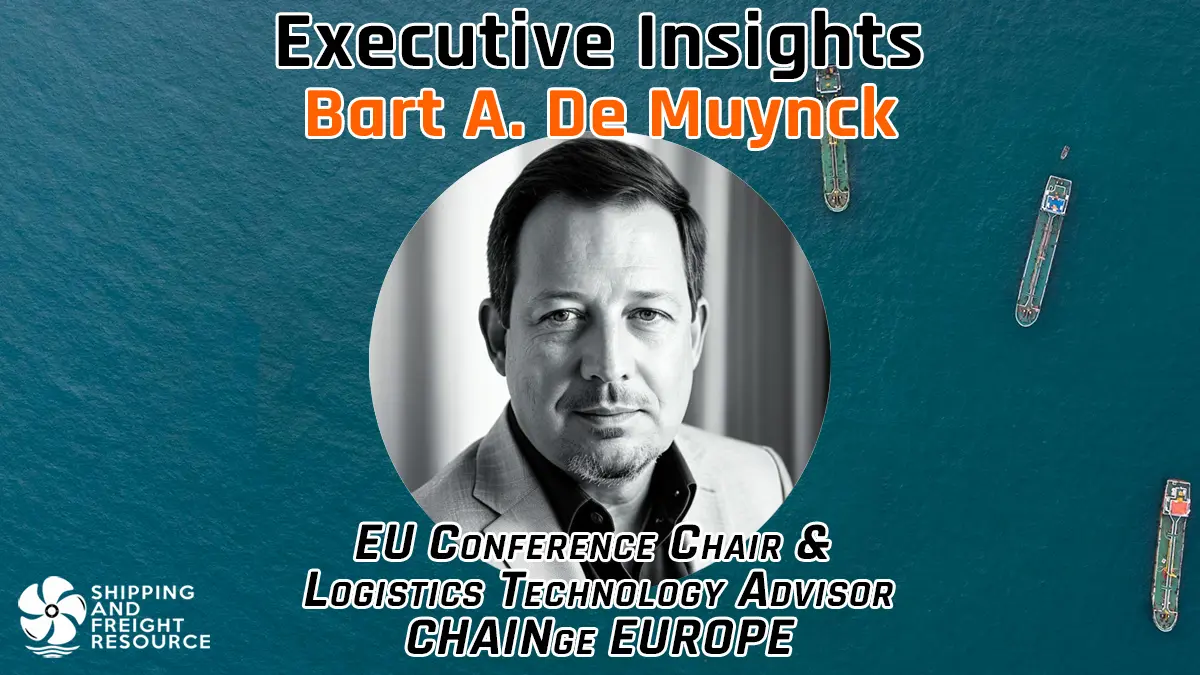
As part of the Executive Insights series, Shipping and Freight Resource caught up with Bart A. De Muynck, Logistics Technology Advisor to CHAINge and EU Conference Chair, to explore how this transformation is about more than just an event and how it is about inspiring and shaping the future of supply chain..
SFR: As Chair for the upcoming CHAINge event on June 17-18,2025 in Brussels, what are you most excited about, and why did you take on this position..??
BDM: With the current challenges in supply chain, supply chain leaders need to have avenues where they can learn about key topics that are presented by other industry leaders. Listening to key experts and learning from each other is key to staying relevant and successful in 2025.
I truly believe that the CHAINge event is an industry event by the industry for the industry. Many other events are hosted by event or research companies or even technology vendors. CHAINge is truly an industry event that can make a long-lasting impact on its attendees.
SFR: Can you elaborate on unique opportunities and experiences that await European supply chain attendees at CHAINge Europe..??
BDM: Attendees at the CHAINge Europe event can expect to get content that is relevant and specific to Europe and even to their specific region within Europe and they can connect to other European leaders that come from a diversified background as well as different industries.
The largest part of the agenda is truly interactive and focused on the education of the attendees. It is my honest belief, that people learn the most when they are in conversation and when they see others on stage engaging in panel discussions on key topics and where they can provide different perspectives on a topic.
SFR: How can supply chain innovations and disruptions help supply chain professionals in Europe navigate the current market conditions driven by geopolitical factors..?? How will these issues be addressed during the conference..??
BDM: Geopolitical factors are creating significant challenges for supply chain professionals in Europe. The war in Ukraine, tensions with Russia, and trade disputes with China are disrupting established trade routes, creating resource scarcity, and causing economic uncertainty.
However, supply chain innovations and the lessons learned from recent disruptions can offer solutions to navigate this turbulent landscape. Embracing technologies like AI, machine learning, task automation, and robotics can improve visibility, optimize logistics, enhance decision-making, and improve efficiency in uncertain times.
All these topics will be discussed both on the key stage in the form of panel discussions, in track sessions as well as in roundtables where the attendees themselves have the opportunity to provide their input in the discussion.
SFR: Given Europe’s emphasis on sustainability, how can CHAINge support in implementing sustainable practices and the circular economy..??
BDM: The event will not only address sustainability regulations but will also provide examples of how companies have embraced sustainability and how you go about implementing sustainable practices.
Sustainability is one of the five key topics that will be addressed both on the key stage as well as in the breakout sessions.
SFR: Will CHAINge be addressing the adoption of emerging technologies such as AI and blockchain and also the adoption of electronic trade documentation..??
BDM: Yes, emerging technologies will be discussed during the conference both on the key stage from the perspective of how that technology helps with the current complexity in supply chain as well as where the intersection lies between technology and talent.
Furthermore, we will be discussing technology as a key area in the roundtables. And finally, we will have tech showcases where these technologies will be demoed and where we have we’ll have a jury made up of shippers, ports, investors, government bodies as well as the audience voting on the best technology.
SFR: What are some ways in which CHAINge EU can enhance education and leadership development in the supply chain for young, emerging and existing professionals across Europe..??
BDM: Talent is the largest constraint in supply chains. And so it is not only important, but it is our duty to make sure that we involve the younger generation of professionals in these events and that we also educate them because they will be our future supply chain leaders.
To that end, we will have a mix of content around talent and leadership, around digital talent and we will also have several academics present so they can discuss their experiences with preparing supply chain talent in European universities.
SFR: What have been some of the challenges and opportunities for the EU in the post-Brexit supply chain environment..??
BDM: I could write an entire chapter on this question, but here is just a snapshot. Brexit has undoubtedly reshaped the EU’s supply chain landscape, presenting a mix of challenges and opportunities. New customs checks, border delays, and added paperwork have increased friction in the movement of goods between the UK and the EU. This has led to longer lead times, higher costs, and increased complexity for businesses.
As the UK establishes its own regulations, businesses face the challenge of navigating two separate regulatory environments. This can lead to confusion, compliance issues, and increased administrative burdens.
The UK’s departure from the EU single market and customs union has disrupted the seamless flow of goods and services that businesses previously enjoyed. This has impacted just-in-time supply chains and increased costs. Brexit also has exacerbated labor shortages in some sectors, particularly in transportation and logistics. This has led to higher wages, increased competition for workers, and potential delays in supply chains.
On the other hand, Brexit has prompted the EU to focus on strengthening trade relationships with remaining member states and exploring new partnerships within Europe. This can lead to more resilient and localized supply chains. To overcome new trade barriers and manage increased complexity, businesses are investing in technology solutions like digital platforms, automation, and data analytics.
This can improve efficiency, visibility, and competitiveness. Brexit also has provided an opportunity for the EU to promote sustainable supply chain practices, such as reducing reliance on long-distance transportation and promoting circular economy models.
SFR: What insights and strategies will CHAINge EU offer to help European organizations build adaptable, resilient, and sustainable supply chains..??
BDM: A lot of the sessions will focus on strategies to build more agile supply chains, a better understanding of how to use talent and the intersection of technology and talent as well as a better understanding of how to apply sustainability in supply chain in 2025.
The insights will come from supply chain leaders who have gone through this process and will be further discussed in the round tables where the attendees themselves can share their own insights. And they will walk away with new relationships and new contacts that they can call.
Faced with increasing complexity, as an industry we all need to collaborate to improve supply chains around the world.
SFR: How do you foresee the current issues with the trade wars and tariffs affecting the EU supply chains..??
BDM: As supply chains have become so much more global in the last several decades, trade wars and tariffs impact companies at a much higher level. The ongoing trade wars and tariffs, particularly those involving the US and China, are creating significant headwinds for EU supply chains.
These disputes disrupt established trade flows, increase costs, and inject uncertainty into global markets, forcing businesses to re-evaluate their strategies and adapt to a more volatile landscape.
Trade wars can even dampen global economic growth, impacting demand for goods and services. This can affect EU businesses that rely on exports or have global operations.
Trade disputes create uncertainty for businesses, making them hesitant to invest in new projects or expand operations. This can stifle economic growth and innovation.
In short, the EU is navigating a complex landscape, trying to maintain trade relationships with both the US and China while also advocating for free and fair trade practices.
At the CHAINge EU event we will discuss that by adapting their strategies, embracing innovation, and leveraging technology, EU businesses can navigate these challenges and build more resilient and competitive supply chains for the future.
SFR: Lastly, what are the key takeaways attendees can expect?
BDM: Attendees will walk away with a nice goodie bag and no, not one that they get at other events filled with vendor T-shirts, logo water bottles, or other knickknacks.
They will walk away with new connections, new learnings, and new ways to apply new processes, new technologies, and strategies around leadership and talent that they will apply in their own companies.
Most importantly, attendees to CHAINge EU are not just attendees – they are part of the content, the deep dive roundtables ensure they engage in discussions that are important to them and learn from peers and experts in an atmosphere designed for learning and knowledge exchange.
Plus CHAINge does not stop with the EU event. It will go on throughout the year with webinars and other informative sessions to continue driving the important topics of supply chain to the forefront.