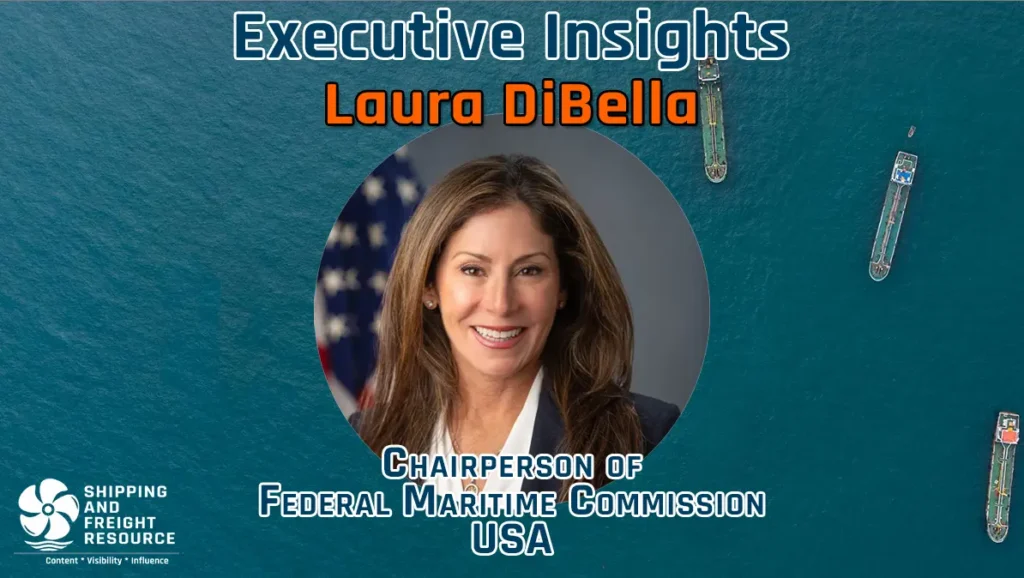

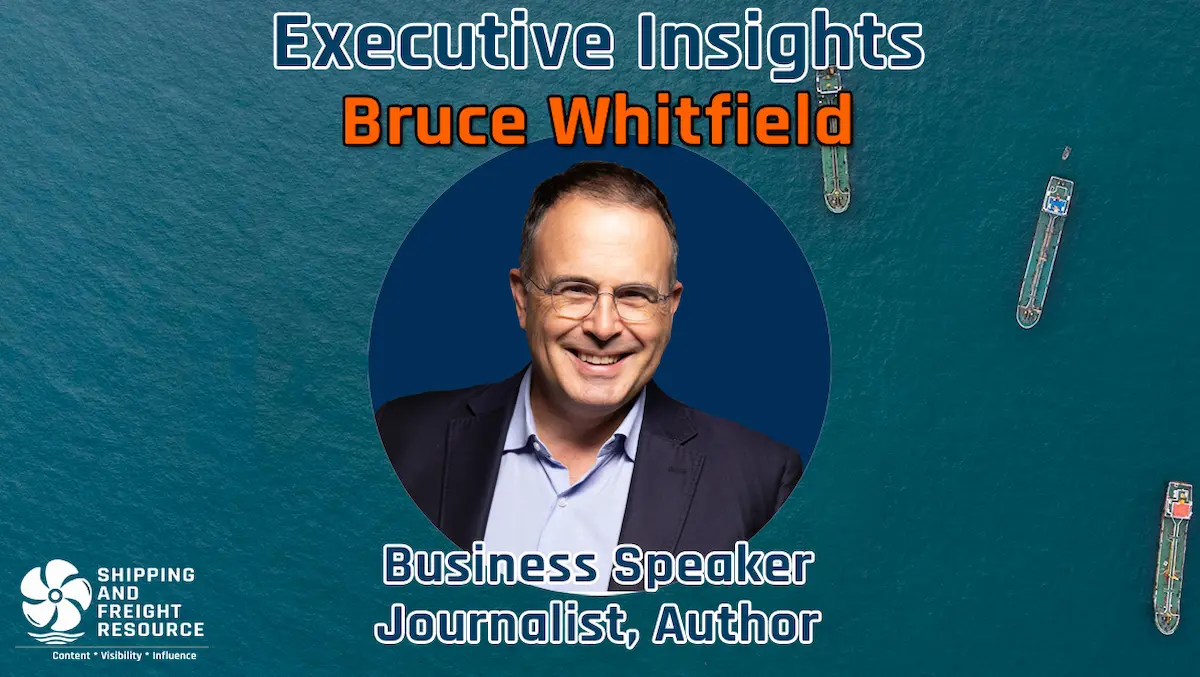
In an era defined by volatility, few commentators interpret economic turbulence with as much clarity as Bruce Whitfield..
A renowned business speaker, award-winning journalist, and creator of the Chaos Advantage framework, Bruce has spent decades helping leaders navigate uncertainty..
In this edition of Executive Insights, we discuss South Africa’s trade capacity, the rand, AGOA, AfCFTA, and the broader geopolitical realignment shaping global commerce in 2026..
SFR: From your perspective, how has South Africa’s role in global trade evolved over the past decade..??
BW: The dominant theme has been the destruction of infrastructure..
In the early 2000s, South Africa benefited from global expansion, strong commodity demand, and average growth rates around 4%.. The systems held together.. Ports functioned.. Rail moved goods.. Trade flowed..
From the mid-2000s onwards, corruption, particularly within Transnet, hollowed out those systems..
Rail and port inefficiencies materially weakened our trade capacity.. The ability to get goods to market efficiently, both imports and exports, deteriorated significantly..
Rebuilding institutional integrity is far harder than destroying it.. That is the reality we are living with today..
The encouraging sign, however, is that there appears to be renewed integrity in leadership.. Operation Vulindlela and closer public–private collaboration are slowly stabilising key systems.. It is gradual, but there is movement in the right direction..
The tragedy is how much stronger South Africa’s trade position could have been had those systems not been compromised..
SFR: How much of South Africa’s trade competitiveness is influenced by the rand..??
BW: The currency often becomes a distraction..
Yes, the rand has weakened significantly over the decades.. Yes, sudden strengthening, such as a move from twenty to sixteen to the dollar, can hurt exporters who priced differently..
But building a strategy on perpetual currency decline is flawed.. The bigger constraint is growth.. South Africa is still growing below its population growth rate.. That is the structural issue..
Competitiveness depends more on efficiency, cost control, and infrastructure reliability than on exchange rate translation..
If you are building your business purely off currency weakness, you are taking a speculative position rather than strengthening fundamentals..
SFR: What about the elephant in the room – United States..?? How do you see its current trade direction affecting South Africa, particularly in relation to AGOA..??
BW: Forecasting in this environment is extremely difficult..
Tariffs remain higher than they were at the beginning of 2025, but not as severe as initially feared.. The rhetoric is volatile, but institutions in the United States remain strong.. Courts and constitutional checks constrain executive power..
It is important to distinguish between the presidency and America as an institution.. Midterm elections will provide a strong signal of public tolerance for unpredictability..
For South Africa, diversification is key.. We are likely to see stronger South-South trade partnerships, deeper European alliances, and broader Asian integration.. In that context, diversified alignment reduces exposure to single-country risk..
Trade wars are not good for America, and they are certainly not good for the rest of the world.. The global system is recalibrating around that uncertainty..
SFR: AfCFTA has been described as transformational, yet progress appears slow.. Why do you think that is..??
BW: We have been talking about African free trade for decades..
The challenge is trust and coordination.. Many African economies continue to prioritise trade northwards rather than regionally.. Commodity dependence further complicates integration..
Perhaps the model needs refinement.. Instead of expecting full continental coordination immediately, stronger regional hubs, West Africa, East Africa, and Southern Africa, could consolidate first.. Those blocs could then collaborate more effectively..
Without deeper internal collaboration, Africa will remain exposed to external geopolitical pressures..
SFR: What signals are you seeing about Africa from Davos and other global forums..??
BW: Historically, Western interest in Africa has leaned more toward extraction than long-term collaborative investment..
China recognised the opportunity early, investing heavily, but often with its own strategic interests at heart..
Until African economies strengthen internal cooperation and negotiate from collective positions of power, external actors will continue to shape the terms.. South Africa, as a G20 member, carries the responsibility to exercise its influence more strategically..
SFR: You often speak about uncertainty.. How should leaders interpret the current moment..??
BW: The World Uncertainty Index has spiked during every major global shock since 1990, 9/11, the Iraq war, the Global Financial Crisis, COVID-19.. It has surged again amid recent trade tensions..
But this is not just about tariffs or one political figure..
We are seeing simultaneous shifts in technology, demographics, migration, and geopolitical alignment.. This is a structural transformation..
Leaders cannot focus narrowly on single risk factors.. They need broader risk metrics and adaptive strategies..
Political figures may be temporary.. The global realignment underway is not..
Final reflection
South Africa’s trade challenges are structural, but so are its opportunities.. Infrastructure reform is progressing, albeit slowly.. Global supply chains are diversifying.. Power blocs are evolving..
In Bruce Whitfield’s view, we are operating in an era of hyper-uncertainty..
For leaders in shipping, freight, and logistics, the task is not to wait for stability to return.. It is to build resilience within instability..
Handled strategically, chaos is not merely disruption.. It can be an advantage..