
Indonesia’s announcement to join the BRICS bloc as a full member in 2025 marks a pivotal shift in global trade and geopolitical dynamics.
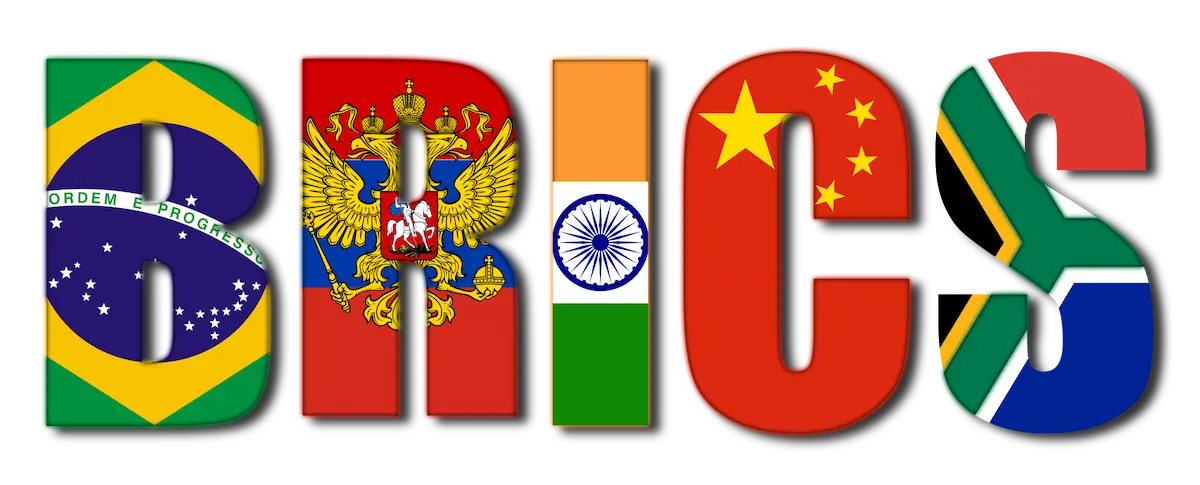
BRICS, originally comprising Brazil, Russia, India, China, and South Africa, has been a cornerstone for promoting multilateralism and creating alternatives to Western-dominated financial institutions.
As per Reuters, Indonesia’s foreign ministry said in a statement on Tuesday that it welcomed the announcement and that “BRICS membership is a strategic way to increase collaboration and partnership with other developing nations.”
With Indonesia now onboard, the bloc gains an influential Southeast Asian economy, further diversifying its representation and reach.
Why Indonesia’s membership matters
Indonesia, Southeast Asia’s largest economy, contributes a $1.3 trillion GDP to the group. Its strategic location along key global shipping routes, such as the Malacca Strait, and its role as a leading exporter of commodities like palm oil and coal make it a vital addition to BRICS.
Speaking on Indonesia’s inclusion, Brazilian President Luiz Inácio Lula da Silva stated, “Indonesia’s entry into BRICS will strengthen our collective voice in reshaping the global economic order.”
Indonesia’s participation also deepens BRICS’s connection to the dynamic ASEAN region, enhancing its ability to influence global trade policies and foster South-South cooperation. “This is a transformative moment for Indonesia and BRICS. It signifies a step towards a more equitable and inclusive world order,” noted analysts at ASEAN Briefing.
Economic and political implications
- Enhanced Trade Networks: Indonesia’s inclusion provides new opportunities for intra-BRICS trade. As an exporter of energy resources and agricultural products, Indonesia is well-positioned to address the growing demands of BRICS members. Al Jazeera highlights how Indonesia’s commodities could “strengthen BRICS nations’ resource security while reducing dependence on Western markets.”
- Financial Collaboration: Indonesia’s financial stability complements BRICS’s efforts to establish a multipolar financial system. Reuters reported that Indonesia is expected to play a key role in advancing initiatives like the New Development Bank and exploring alternatives to dollar-denominated trade.
- Geopolitical Leverage: As a key ASEAN player, Indonesia’s non-aligned stance provides BRICS with a diplomatic bridge in the Indo-Pacific, a region marked by increasing geopolitical tensions. “Indonesia’s strategic neutrality and growing economic clout make it an indispensable partner in fostering dialogue and stability,” noted a recent AP report.
Impact on global shipping and trade
Indonesia’s entry into BRICS has profound implications for global shipping and trade. The nation’s strategic location, combined with its maritime ambitions, positions it as a linchpin for trade connectivity.
- Enhanced Connectivity: Indonesia’s ports, including those in Jakarta and Surabaya, are crucial to global shipping lanes. Investments in infrastructure, supported by BRICS collaborations, could alleviate logistical bottlenecks and enhance trade efficiency. ASEAN Briefing pointed out that Indonesia’s membership could “unlock new funding for port development projects, boosting regional and global connectivity.”
- New Trade Corridors: As part of BRICS, Indonesia is expected to align with expanded trade networks across Asia, Africa, and Latin America. This could spur the creation of new shipping routes, potentially reducing costs and delivery times for global trade. Al Jazeera emphasizes that “Indonesia’s maritime strategy could be revolutionized through BRICS-backed initiatives, reshaping regional trade flows.”
- Maritime Sustainability: BRICS’s focus on green energy and technology could bolster Indonesia’s efforts to modernize its shipping sector. Reuters quoted a trade expert stating, “Indonesia’s involvement in BRICS will likely accelerate its adoption of sustainable maritime practices, aligning with global decarbonization goals.”
- Diversified Partnerships: By strengthening trade ties within BRICS, Indonesia reduces its dependence on Western markets, paving the way for diversified trade agreements. This shift is expected to recalibrate global trade dynamics, especially in emerging markets.
Challenges and opportunities
While Indonesia’s membership in BRICS unlocks vast potential, it also presents challenges. Balancing its national interests with the bloc’s objectives, navigating differing priorities among BRICS members, and managing regional expectations will require diplomatic finesse. However, with its growing economic clout and strategic vision, Indonesia is well-equipped to navigate these complexities.
Conclusion
Indonesia’s membership in BRICS signifies a new era of economic and geopolitical alignment. For global shipping and trade, this development is poised to reshape routes, enhance connectivity, and foster deeper collaboration among emerging economies.
As Brazilian President Lula da Silva aptly summarized, “Together, we are building a world where emerging nations have an equal stake and voice in global decision-making.”
Indonesia’s journey with BRICS is just beginning, but its impact on global trade and shipping will be transformative, heralding a future of greater inclusivity and shared growth.