
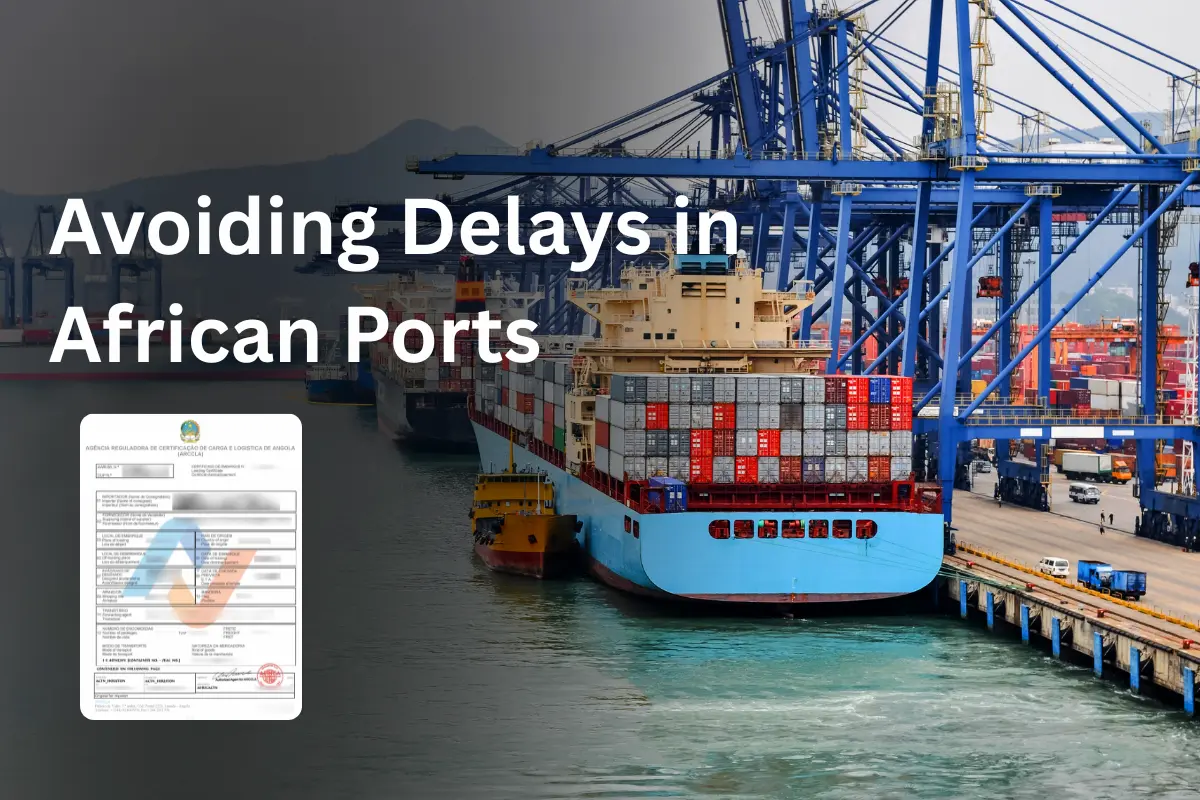
When moving cargo into many countries in West Africa, one of the most common delays and causes of penalties/fines is a missing cargo tracking note (CTN).
If your shipment arrives without this document, clearing your cargo through the port becomes much more time-consuming, whether you’re shipping commercial goods, humanitarian aid, or personal effects.
To keep your cargo moving smoothly, it’s important to know what the CTN is, when it is required, and how to get it before the deadline.
What is CTN, and why is it required?
A CTN can be known by many other names, such as ECTN, BSC, BESC, BIETC, CNCA, FERI, ENS, ARCCLA, and ACD, depending on the destination country.
All of these refer to a mandatory loading document that contains details about the shipment, such as shipper and consignee information, commercial value of the goods being shipped, and the loading and discharge port.
Shippers’ councils use this document to verify cargo details, improve port security, and speed up customs clearance. Without the document, your shipment can face fines, penalties, and in some cases rejection of the cargo.
It is the responsibility of the shipper or freight forwarder to obtain the ECTN prior to the deadline to prevent delays for the importer in the destination port.
What is the CTN validation deadline?
Most countries require the CTN to be validated prior to vessel arrival. However, some countries, such as Gabon, require the Prior Agreement to be validated prior to vessel departure.
And others, such as the Republic of Congo, require the ECTN to be validated within 5 days of vessel departure.
It is important to confirm the deadline for your destination country to prevent delays and heavy fines.
Which countries require the ECTN or equivalent waiver certificate?
There are 25+ countries that require the ECTN in Africa. The deadlines and requirements are constantly changing, so it is important to always confirm the ECTN requirement before shipping your goods.
Angola, Benin, Burkina Faso, Burundi, Cameroon, Central African Republic, Chad, Equatorial Guinea, Gabon, Democratic Republic of the Congo, Djibouti, Guinea-Bissau, Ivory Coast, Liberia, Madagascar, Mali, Niger, Republic of Congo, Republic of Guinea, Senegal, Sierra Leone, Somalia, South Sudan, Sudan ACD, Togo, Yemen
Document Requirements for the ECTN
Before applying for a CTN, the following documents are required:
- Bill of Lading
- Commercial Invoice
- Freight Invoice (not required if the freight value is listed on the commercial invoice)
Depending on the destination country, additional documents may be required such as:
- Documento Unico
- Certificate of Insurance
- ARCCLA Form
- Export Declaration
- Packing List
AfricaCTN can help confirm what is required for each destination country.
The ECTN application process
Each country that requires the ECTN has a very similar process for obtaining the CTN. The process is as follows:
- Send Your Documents to the Agent
- The agent will review the cargo information and ensure all required documents are present and complete
- Receive the Draft ECTN and Invoice
- A draft CTN is created so you can verify the details match your documents
- Approving the Draft ECTN
- If all details are correct, let your agent know that the draft is approved
- Pay the Invoice
- Once the draft is approved, you can pay the invoice for the ECTN
- Receive the Validated CTN Certificate
- Once all the steps are completed, your agent will submit the draft CTN to the port authorities to validate the certificate. Depending on the destination country, this can take 24-48 hours before the final validated certificate is released
Important compliance notes
- The CTN requirement applies to all shipments, including containers, break bulk, RORO, and general cargo
- Madagascar and DR Congo require the CTN for air freight shipments as well as ocean freight shipments
Final word
A correct and complete CTN can help prevent delays and costly fines in African ports. The CTN helps improve port security and speed up customs clearance.
Whether you are shipping commercial goods, personal effects, or humanitarian aid, a CTN is required when shipping to more than 25 African countries, so check with a CTN agent to ensure your cargo will be cleared without delays.