
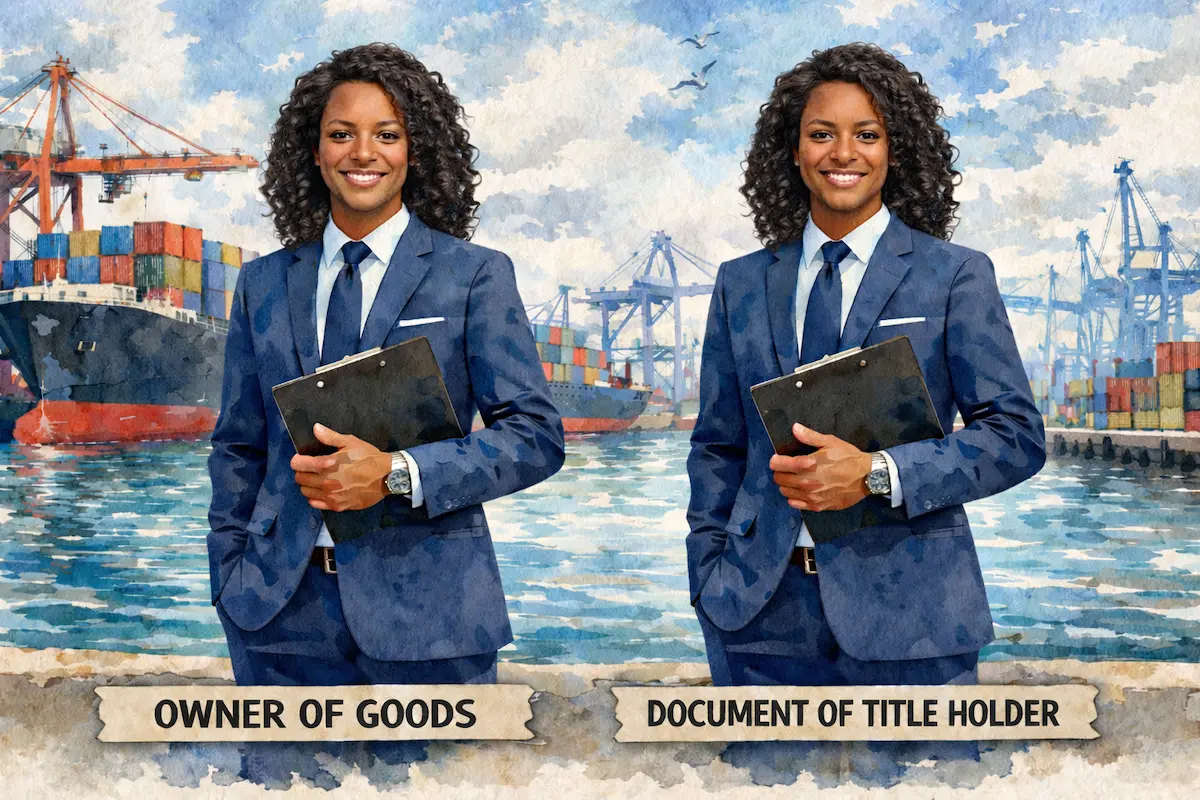
This is one of those distinctions that trips up a LOT of people in global trade, including some who have been in the business for years..
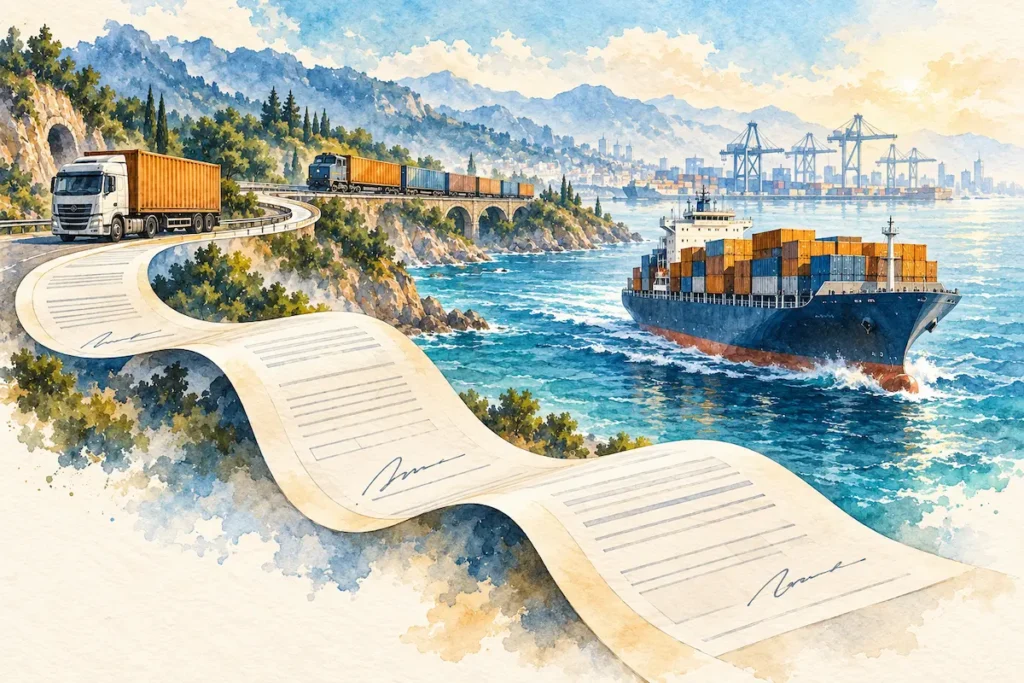
A Document of Title is a document that gives the person holding it the right to claim the goods described in that document.. The most common example in shipping is the Negotiable Bill of Lading.. Whoever holds the original, endorsed Bill of Lading has the right to take delivery of the cargo at the destination port..
A Document of Title does NOT automatically make you the Owner of the goods..
Ownership of Goods refers to the legal right of property in the goods.. In most trade transactions1, ownership transfers from seller to buyer at the point of PAYMENT.. Once the buyer pays for the goods, the goods legally belong to them.. Full stop..
But while a buyer who has PAID for the goods is the legal owner, they may not yet hold the Document of Title, and without it they cannot take delivery of the goods they own.. Their payment is just the EVIDENCE of their ownership, not the Document of Title..
So the two things, the document and the ownership, travel on different tracks..
- Ownership answers the question of WHO the goods belong to, which in most cases is the party who has PAID for them..
- Document of Title answers the question of WHO can take delivery of the goods..
These two questions can have DIFFERENT answers at the same point in time..
A bank financing a trade transaction will often hold the original Bill of Lading as security for its loan.. As the holder of the Document of Title, the bank controls delivery until the buyer settles their dues, but it is NOT the owner of the goods.. The buyer owns the goods the moment they make payment.. But they cannot touch those goods until the bank releases the Document of Title.. And that is exactly the security the bank is relying on..
Here is a question worth asking
Does the carrier verify ownership before releasing the goods..??
The short answer is NO, and that is by design..
The carrier is NOT obligated to investigate who owns the goods, just as it is NOT the bank’s obligation to verify whether goods have actually been shipped.. Under the contract of carriage, the carrier simply delivers the goods to whoever presents the original Bill of Lading in good order, duly endorsed where required..
They do not ask for payment receipts, sales contracts, or proof of ownership.. The Document of Title IS their authority to release, and that is where their responsibility begins and ends..
This is exactly why the Bill of Lading is such a powerful document.. It is also why misuse or mishandling of it can cause so much damage..
If a carrier releases goods to the wrong party, the argument that “but we own the goods” does NOT automatically hold up.. Their obligation is to deliver to the holder of the Document of Title, NOT necessarily to the owner of the goods..
A carrier who releases goods without the consignee first surrendering the original Bill of Lading takes on significant legal and financial exposure, even when a Letter of Indemnity is provided..
This distinction becomes critically important in cargo disputes, insurance claims, and cases where a carrier releases cargo without the original Bill of Lading..
So what is the key takeaway here..??
PAYMENT establishes ownership in most cases.. The Document of Title controls ACCESS to the goods.. The carrier verifies the DOCUMENT, not the ownership.. These are separate concepts, governed by separate sets of rules..
Mixing them up or assuming they are the same thing can lead to serious commercial and legal consequences for everyone in the chain, whether you are a shipper, consignee, freight forwarder, carrier or a bank..
1 There are transactions where ownership transfers before payment or even without payment altogether.. Open Account trading requires no bank involvement, though a bank may participate in some cases through invoice financing or factoring.. The seller sends documents directly to the buyer, with ownership and access to goods transferring well before payment follows on agreed terms.. With Documents against Acceptance, the collecting bank releases documents upon the buyer accepting a draft, a signed promise to pay at a future date, with no upfront payment required.. Barter, consignment, inheritance and court-ordered transfers are cases where ownership moves without any payment at all.. So “at the point of payment” is the most common trigger, but it is certainly not the only one..