
As 2026 opens, freight markets across Asia-Pacific are not moving in a single direction.. Demand has not collapsed, but it is no longer the dominant force shaping capacity, pricing, or reliability..
Instead, structural imbalances, regulatory pressure, and operational constraints are setting the tone for the months ahead..
The Dimerco Asia-Pacific Monthly Freight Report for January 2026 highlights a market that is stabilising in some lanes, tightening unexpectedly in others, and remaining highly sensitive to disruption..
This is not yet a recovery cycle, but it is clearly a transition phase, one that rewards informed, lane-specific decision-making rather than broad assumptions..
Manufacturing signals remain fragile
Global manufacturing indicators continue to hover close to the expansion threshold, but momentum has softened.. Output growth is uneven, new orders are inconsistent, and employment trends are slipping back into contraction in several economies..
Across Asia-Pacific, the divergence is stark, with technology-driven exporters outperforming consumer-led and inventory-heavy markets..
The implication for freight is clear: volume alone will not define market conditions in early 2026.. Cargo type, origin, and destination matter more than headline demand figures..
Airfreight tightens where value concentrates
Airfreight remains one of the most active segments, but strength is highly selective.. High-tech, semiconductor, AI, and e-commerce cargo continue to support outbound volumes from key Northeast and Southeast Asian hubs..
At the same time, aircraft delivery delays and limited belly capacity are constraining supply, particularly on intra-Asia and long-haul lanes..
Major transit hubs such as Hong Kong, Taipei, Singapore, Incheon, and Narita remain congested, not due to across-the-board demand growth, but because capacity is being prioritised toward higher-yield cargo and routes..
As Lunar New Year approaches, competition for space is intensifying, with rate pressure building in specific corridors..
Ocean freight shaped by capacity decisions, not demand recovery
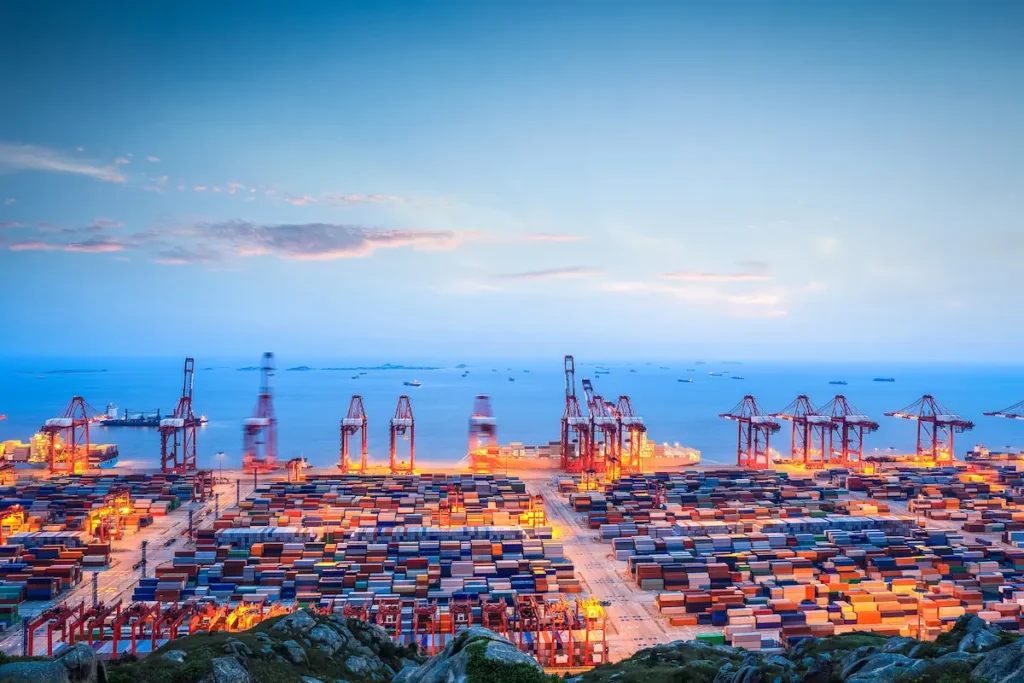
Ocean freight tells a more cautious story.. Global container capacity continues to expand, but deployment remains uneven..
Capacity has shifted toward Asia–Europe, the Middle East, and Africa, while Transpacific capacity has contracted, and Intra-Asia growth remains modest..
Despite the extension of the US–China tariff truce, shippers remain cautious.. Market consensus suggests that a meaningful rebound in volumes is unlikely in the first half of 2026..
The potential return of Red Sea transits adds further uncertainty, with the risk of excess capacity re-entering an already fragile market..
Trade compliance moves back to the foreground
Regulatory risk is once again a defining factor.. US authorities have flagged a rise in illegal transshipment and tariff evasion, triggering intensified enforcement and penalties..
Mexico has expanded tariffs on Chinese-origin goods while tightening origin verification, and new restrictions on foreign-manufactured drones in the US add another layer of compliance exposure..
These developments underline a critical reality for 2026: trade compliance is no longer peripheral.. It directly influences routing, documentation accuracy, landed cost, and operational continuity..
Conclusion
January 2026 is not a month for generic forecasts or averaged assumptions.. Conditions vary sharply by lane and region, and early decisions will shape cost and reliability for the rest of the year..
The Asia-Pacific Monthly Freight Report by Dimerco provides detailed regional analysis, lane-level forecasts, and regulatory insight that go beyond surface indicators..
For shippers, logistics leaders, and trade professionals navigating Asia-Pacific in 2026, it offers essential context for informed, risk-aware planning..