
2025 marked a decisive turning point in India’s efforts to modernise its shipping laws, streamline trade documentation, and position itself as a pivotal hub in global supply chains..
In a country first for the maritime sector, in a single Parliament session, the largest democracy in the world passed five landmark maritime legislations, making 2025 a year defined by legal transformation, international alignment, and strategic competitiveness..
- The Bills of Lading Act, 2025
- The Carriage of Goods by Sea Bill, 2025
- The Coastal Shipping Bill, 2025
- The Merchant Shipping Bill, 2025, and
- The Indian Ports Bill, 2025
Merchant Shipping Act, 2025
The Merchant Shipping Act, 2025, repealed the old Act of 1958, a milestone in aligning Indian maritime law with international conventions and modern operational norms.. This new Act:
- Consolidates merchant shipping law into a streamlined framework..
- Aligns regulations with International Maritime Organization safety and environmental standards..
- Enhances protections for seafarers while simplifying compliance and documentation..
- Facilitates digital procedures and ease of doing business in port and shipping operations..
Bills of Lading Act, 2025
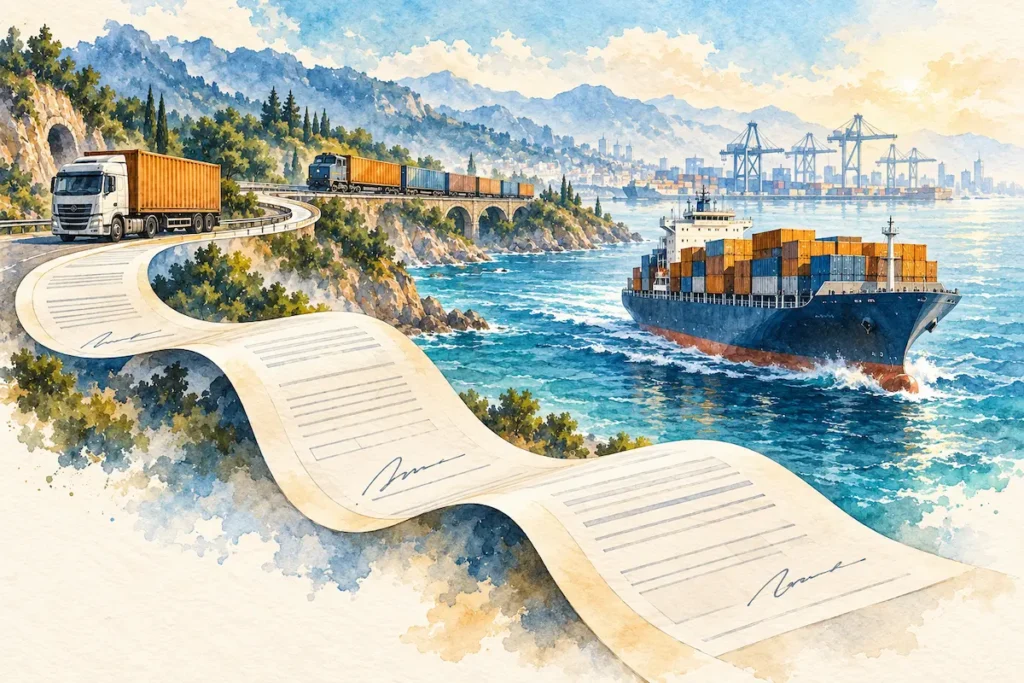
The Bills of Lading Act, 2025, replaced the archaic Bills of Lading Act of 1856 with far-reaching benefits..
- Modern definitions of rights, title, and liability related to shipping documents..
- Support for secure, paperless trade documentation that aligns with global digital standards..
- Reductions in administrative delays, cargo demurrage elsewhere, and bottlenecks tied to physical documentation movement..
This change matters because bills of lading are central to the movement of goods, they represent cargo ownership, facilitate finance and insurance coverage, and anchor dispute resolution in maritime trade..
Modernising this law improves India’s trade ecosystem efficiency and reduces friction for international partners..
Indian Ports Act, 2025
On the port governance side, the Indian Ports Act, 2025, replaced the Indian Ports Act of 1908..
By unifying port legislation and governance, this Act addresses a fundamental bottleneck: administrative fragmentation that previously slowed decision-making and investment in port infrastructure..
India has boarded the Reform Express
Commenting on these reforms in a year-end post, Prime Minister Narendra Modi said, “I have been telling many people that India has boarded the Reform Express. The primary engine of this Reform Express is India’s demography, our young generation, and the indomitable spirit of our people.
2025 will be remembered as a year for India when it focused on reforms as a continuous national mission, building on the ground covered over the past 11 years. We modernised institutions, simplified governance, and strengthened the foundations for long-term, inclusive growth.”
Beyond Laws: Operational and strategic momentum
Legal reform alone does not define maritime progress, changes in operational frameworks and strategic policies complete the picture..
1) Strategic flagging and fleet growth
2025 also saw policy decisions aimed at increasing Indian tonnage and encouraging global shipowners to consider India as a flag state of choice..
This includes expanded vessel ownership provisions in the Merchant Shipping Act that welcome foreign investment and broader participation in India-flagged shipping activities..
These moves strengthen national fleet planning dialogues and attract capital into Indian maritime enterprise, a long-term prerequisite for robust global trade integration..
2) Global recognition and investment interest
India Maritime Week 2025 attracted shipping leaders from over 85 countries, signaling a rising confidence in the Indian maritime agenda..
The participation of CEOs from major global carriers and policymakers reflects both global interest in India’s maritime evolution and an increasing willingness to partner in port and trade projects..
Why these changes matter for shipping and global trade
For freight forwarders, carriers, export councils, and global logistics planners, the implications of India’s 2025 maritime transformation are immediate and strategic:
- Legal clarity reduces risk: Modern statutes align with international norms, which streamlines dispute resolution and enhances contractual certainty..
- Digital documentation accelerates throughput: Embracing electronic bills of lading and digitised procedures cuts cargo dwell time, reduces litigation risk, and supports global digital trade systems..
- Port governance reform improves competitiveness: Unified port regulation and transparency promote fair pricing, predictable cargo handling timelines, and investment confidence..
- Strategic fleet policy boosts Indian tonnage: Expanded ownership provisions and fleet incentives can attract global shipping capital and strengthen India’s role in ocean trade lanes..
These reforms, combined with long-range infrastructure programmes like Sagarmala and broader logistics integration efforts, position India not simply as a trade corridor but as a maritime trade partner with global resonance..
Conclusion: A new maritime era
In 2025, India did more than adjust regulations, it reimagined its maritime legal architecture and trade facilitation systems in ways that align with 21st-century shipping needs..
By retiring colonial-era statutes and adopting forward-looking laws, the nation has cracked open the door to enhanced global competitiveness, logistical efficiency, and stronger integration into international supply chains..
For shipping professionals, logistics strategists, and global traders alike, understanding these reforms is not academic, it is a strategic imperative as India’s role in global seaborne trade continues to expand..