
Things are definitely heating up in the US of A and the rest of the maritime world..
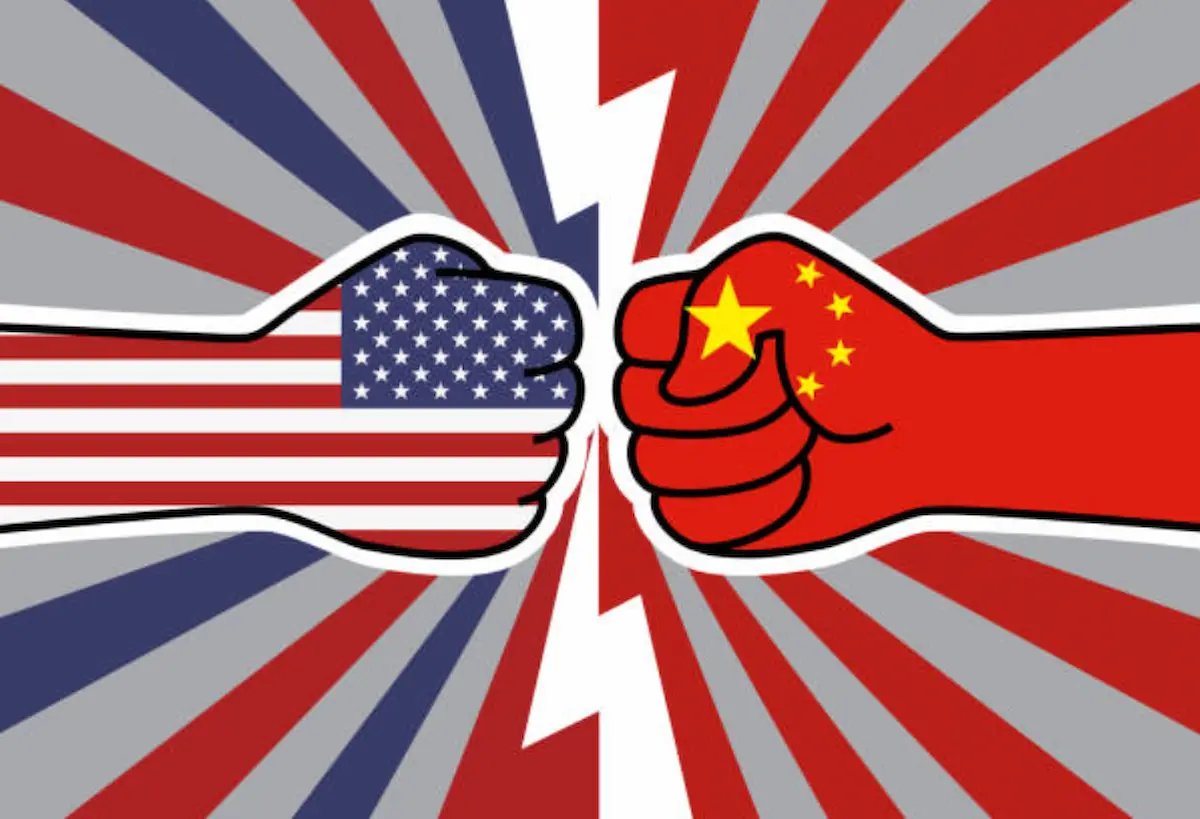
On Friday 21st Feb 2025, the US Trade Representative (USTR) announced a proposal targeting Chinese-built ships and Chinese shipping companies, imposing port fees that range from $500,000 to a staggering $1.5 million per call..
But here’s the kicker, it’s not just Chinese companies like Cosco that will feel the heat.. Any shipping line with a Chinese-built ship or an order placed in a Chinese yard could be caught in this web..
If this Section 301 action moves forward, the consequences are expected to be massive, not just for China, but for global ocean shipping and, ultimately, American importers and exporters..
What’s in the USTR Proposal..??
The proposal, which is still open for public comment until March 24, 2025, follows the USTR’s determination that China has been unfairly dominating global shipbuilding through subsidies, aggressive industrial policies, and state-backed financing..
The USTR argues that China’s influence “burdens or restricts US commerce” and has left American shipbuilding “severely disadvantaged”..
But the proposed solution..?? Well, it’s controversial at best, disruptive and counterproductive at worst..
Here’s what is proposed:
- Chinese ship operators (like COSCO) will be charged up to $1 million per port call..
- Any ship operator with Chinese-built vessels will pay a tiered fee:
- $1.5 million per port call if the vessel itself was built in China..
- $1 million per call if 50% or more of an operator’s fleet is Chinese-built..
- $750,000 per call for fleets with 26-49% Chinese-built vessels..
- $500,000 per call for fleets with just one Chinese-built ship—even if that ship never calls in the US..!!
- Even new build orders are targeted.. If a company has an order at a Chinese yard for delivery in the next 24 months, they’ll pay up to $1 million per call..
To put this into perspective, a major container carrier making multiple US port calls per loop could suddenly see millions in additional costs per voyage..
These costs are naturally expected to be passed down to end consumers in the USA..
So what is the endgame here..??
According to the USTR’s report, China’s shipbuilding dominance is a national security threat and an unfair trade practice..
The report states “China’s targeting of the maritime, logistics, and shipbuilding sectors for dominance is unreasonable because it displaces foreign firms, deprives market-oriented businesses of commercial opportunities, and creates economic security risks by increasing dependence on China.”
The USTR argues that because China builds more than 50% of the world’s ships, owns 19% of the global fleet, and controls 95% of shipping container production, it has an outsized influence on global trade..
So, in theory, the USA is trying to level the playing field.. But does this approach solve anything, or does it just create new problems..??
Will this proposal backfire..??
If we look at it realistically, this proposal may not hurt China as much as it will disrupt global shipping..
Why..?? Because Chinese shipyards dominate the shipbuilding industry not just in container ships, but also in bulk carriers, tankers, LNG carriers, and others..
As per Clarksons Research’s annual review of the shipbuilding industry, 2024 saw the largest order intake in 17 years, with contracts totalling 66 million CGT and valued at $204 billion..
As per the data, shipyard output increased by 13% globally wherein
- China took 53% market share with a +18% Y-o-Y
- South Korea has a 28% market share with a +22% Y-o-Y while
- Japan’s output declined by 3% Y-o-Y to a 12% market share
Around 66% of all new ship orders placed in 2024 (measured in CGT/DWT) went to Chinese shipyards.. On the shipbuilding output, China has a 53% market share meaning that of all ships delivered globally in 2024, 53% were built in China..

As you can see, ship owners can’t just “switch” to non-Chinese shipyards overnight to avoid the costs proposed by the USTR..
If the proposal is approved, there are speculations that non-US shipowners, which is the majority of the ships calling the USA, will have to charge surcharges on freight to cover these additional costs..
As per Lloyd’s List Intelligence data, only 9% of Chinese-built ships called in the US in the first quarter of 2024, which is not a big number and these ships could be redeployed to non-US services where these ships/owners would not face such issues..
This will eventually mean that US businesses and consumers will pay the price with increased shipping costs pushing inflation higher, hitting importers, exporters, and American households..
And of course let us not forget that China could retaliate by controlling the massive cargo flows or imposing countermeasures on key US agriculture, LNG or other exports..
There is also speculation that these measures could give rise to parallel shipping networks much like the current dark fleets around the world..
In conclusion, what the USTR seems to be missing is the importance of China and its trade with the USA.. Targeting Chinese-built ships operated by shipping lines that call USA will be counter-productive to US interests and its trade..